
Blog
Why Homes Look Better Online Than In Person
Real Estate, Home Buying
Why Does a House Look Better Online Than It Does in Person?
If you’ve ever walked into a home you loved online only to feel underwhelmed in person, you’re not alone. There are clear reasons this “listing glow-up” happens and understanding them can make you a smarter buyer or seller.
The Power of Carefully Chosen Angles
Online, you’re seeing a home through a highly selective lens. Listing photos are usually taken from the most flattering angles often from corners that make rooms appear more open and balanced than they feel in real life. A narrow hallway can look generous when shot from the very end; a small bedroom appears larger when the photographer positions the camera just right and avoids showing awkward nooks or low ceilings.
In person, you experience the full 360 degrees: the strange transition between rooms, the tight doorway, or the fact that furniture placement is trickier than the photos suggest. The camera hides what the eye cannot ignore once you’re standing in the space.
Wide-Angle Lenses and the Illusion of Space
Professional real estate photographers often rely on wide-angle lenses. These lenses are designed to capture more of the room in a single shot, but they also subtly distort proportions. Walls seem farther apart, ceilings feel higher, and floor areas appear more generous than they truly are. This effect can be particularly dramatic in smaller rooms like bathrooms, entryways, or compact living areas that look surprisingly spacious online.
When you step into the actual room, that sense of openness disappears. Instead of the airy retreat you imagined, you’re faced with a space that feels tighter and more enclosed. The room didn’t shrink your expectations were stretched by the lens.
Lighting Tricks: Bright, Soft, and Carefully Controlled
Lighting is one of the biggest reasons homes look better online. Photos are usually taken at the perfect time of day, with blinds adjusted just so, lamps strategically switched on, and harsh shadows minimized. On top of that, post-processing often brightens dark corners, evens out color, and removes the yellow or blue tints that everyday lighting can create.
When you tour the home, you’re likely seeing it under far less flattering conditions: a cloudy afternoon, a burnt-out bulb, or heavy curtains that weren’t opened. Natural light may not flood the room the way it appeared to online, and once the sun shifts, a “sunny” space can suddenly feel dim and flat. The difference between edited light and real light is often the difference between “dreamy” and “underwhelming.”
Staging, Styling, and the Absence of Real Life Clutter
Online listings typically show homes at their most polished. Professional staging replaces oversized sofas with perfectly scaled furniture, adds neutral textiles, and introduces just enough decor to feel inviting without being busy. Countertops are clear, beds are crisply made, and every surface is curated to create a lifestyle, not just a room.
In person, you notice the realities that photos leave out: scuffed baseboards, worn carpet, or how little storage there really is once you imagine your belongings inside. Even in vacant homes, the absence of staging can be jarring. Rooms that looked warm and welcoming online may feel echoey, smaller, or harder to visualize as truly yours without that styled layer of polish.
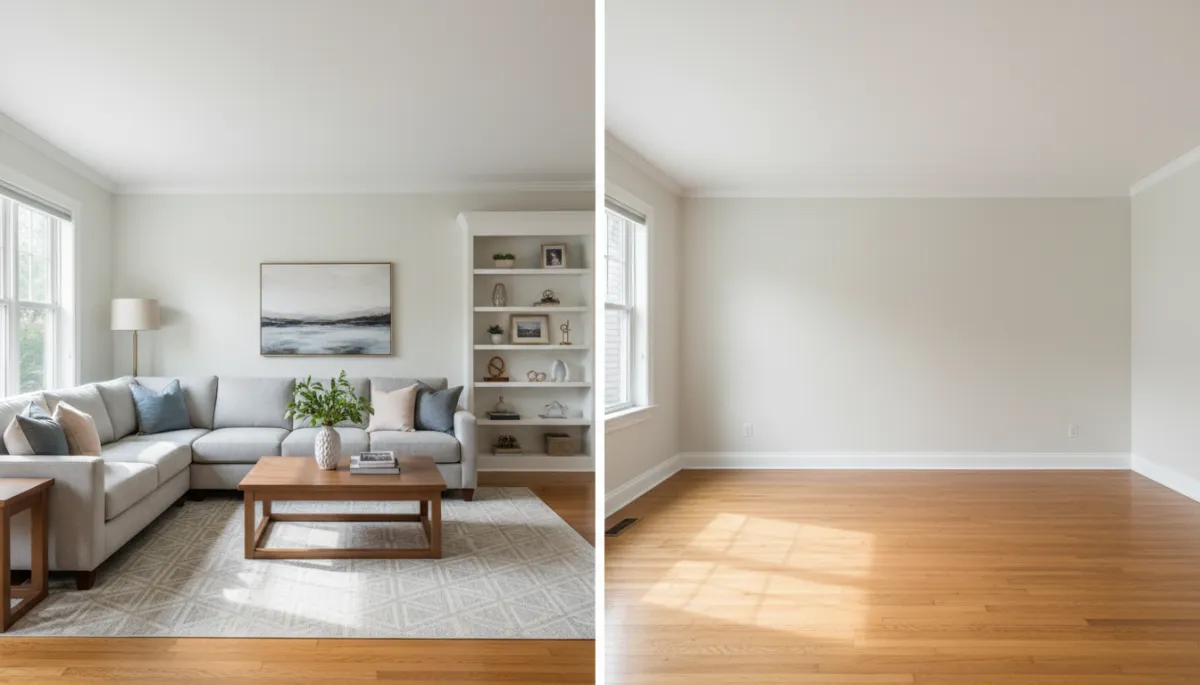
Thoughtful staging highlights a home’s best features and minimizes distractions for online viewers.
Editing, Filters, and Digital Touch-Ups
Most listing photos don’t come straight out of the camera. They’re edited to appear cleaner and more appealing. Colors are balanced to make walls look whiter, grass greener, and wood tones richer. Minor imperfections like small stains, cords, or distracting objects might be reduced or removed entirely. Even skies can be swapped to add a soft, inviting glow outside the windows.
None of this is necessarily dishonest, but it does create a subtle gap between expectation and reality. When you arrive, the paint may feel slightly duller, the yard less lush, and the finishes a touch more worn than the photos suggested. The home is the same; the digital polish has simply been removed.
Why Your Brain Fills in the Blanks Online
There’s also a psychological side to all of this. When you browse homes online, you’re not just seeing rooms you’re projecting your ideal life into them. You imagine better habits, tidier spaces, and a more organized version of yourself. Because photos are limited and curated, your mind automatically fills in the missing details in the best possible way.
Walking through the property interrupts that fantasy. You notice traffic noise, creaky floors, or how close the neighbors actually are. The home stops being a blank canvas and becomes a real, imperfect place. That shift from imagination to reality can feel disappointing, even if the house is objectively nice.
Closing the Gap Between Online and In Person
Understanding why a house looks better online than it does in person helps both buyers and sellers. As a buyer, go into showings knowing that photos are a highlight reel, not a full documentary. Pay attention to room dimensions, floor plans, and any available virtual tours to get a more realistic sense of the space before you visit. During the tour, focus on what you can change paint, furniture, decor—versus fixed elements like layout and natural light.
As a seller, professional photos and staging are still powerful tools, but transparency matters. Aim to present your home at its best while keeping expectations grounded. When the online story and in-person experience match closely, everyone walks away feeling more confident and far less disappointed—about the home in question.


John Meier
Westplex Real Estate
504 N State Hwy 47
Warrenton, MO
Phone: (636) 242-5365


