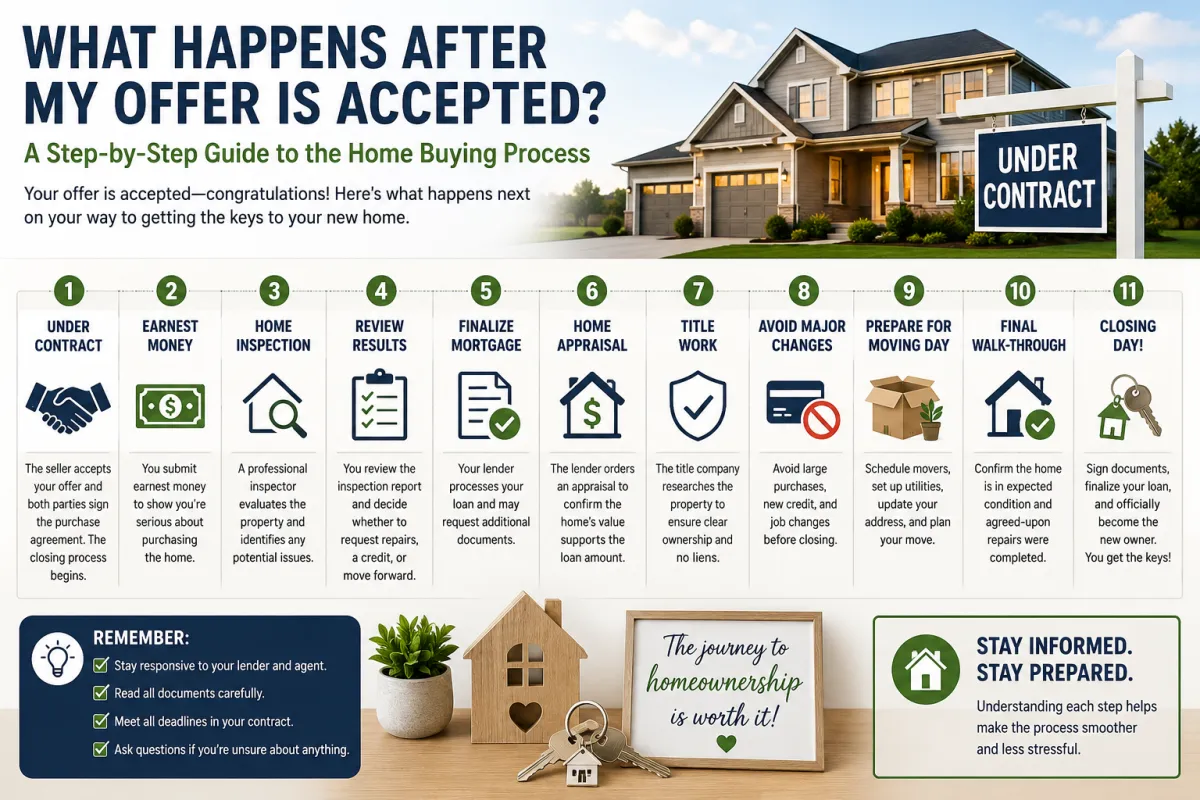
What Happens After an offer is accepted?
Getting your offer accepted is one of the most exciting moments in the home buying process.
After searching for homes, touring properties, negotiating terms, and competing with other buyers, you've finally received the news you've been waiting for.
Your offer has been accepted.
But what happens next?
Many buyers assume they're almost done. In reality, several important steps still need to happen before you receive the keys and officially become the owner.
Understanding the process ahead can help reduce stress and prevent surprises.
John Meier is a real estate agent in Warrenton, Missouri helping buyers in Warrenton, Wright City, Truesdale, Foristell, and throughout Warren County successfully navigate the home buying process.
The Home Goes Under Contract
Once both parties sign the purchase agreement, the property moves into what's commonly called under contract status.
This means:
The seller has accepted your offer.
Both parties have agreed to the contract terms.
Contract deadlines begin.
The closing process officially starts.
At this point, you're moving toward ownership, but several important milestones still need to be completed.
Earnest Money Is Deposited
Most contracts require buyers to submit earnest money shortly after acceptance.
Earnest money is a deposit that shows you're serious about purchasing the home.
The funds are typically held by a title company or escrow company until closing.
The amount varies depending on the transaction and local market conditions.
Schedule Your Home Inspection
One of the first major steps is the home inspection.
A licensed inspector evaluates the property's condition and identifies potential issues.
The inspection often covers:
Roof
Foundation
Plumbing
Electrical systems
HVAC systems
Windows and doors
Appliances
Structural components
No home is perfect.
The goal is to understand the property's condition before moving forward.
Review the Inspection Results
After receiving the inspection report, you'll decide how to proceed.
Your options may include:
Accepting the property as-is
Requesting repairs
Requesting a credit
Requesting a price adjustment
Moving forward without changes
Many buyers are surprised by the length of inspection reports. Even newer homes usually have items noted by inspectors.
The key is identifying which issues are significant and which are normal maintenance items.
Finalize Your Mortgage
If you're obtaining financing, your lender continues processing your loan.
During this stage, the lender may request:
Updated bank statements
Pay stubs
Tax returns
Employment verification
Additional documentation
One of the most common mistakes buyers make is assuming loan approval is complete after pre-approval.
Pre-approval is only the beginning.
Final underwriting approval still needs to occur before closing.
The Home Is Appraised
Your lender typically orders an appraisal.
The appraiser's job is to determine whether the home's value supports the loan amount.
The appraisal considers:
Comparable sales
Property condition
Features and upgrades
Market conditions
Most appraisals proceed smoothly, but occasionally a property may appraise below the agreed purchase price.
If that happens, additional negotiations may be necessary.
Title Work Begins
The title company researches the property's ownership history.
Their job is to verify:
Clear ownership
No unresolved liens
No ownership disputes
Proper legal transfer of ownership
This process protects both the buyer and lender.
Avoid Major Financial Changes
While waiting for closing, buyers should avoid making significant financial changes.
Try to avoid:
Opening new credit cards
Financing vehicles
Making large purchases
Changing jobs if possible
Moving large amounts of money between accounts
Lenders often perform final reviews before closing.
Major financial changes can sometimes create delays.
Prepare for Moving Day
As closing approaches, it's time to start preparing for the move.
Common tasks include:
Scheduling movers
Setting up utilities
Updating your address
Planning move-in logistics
Purchasing homeowner's insurance
Starting early can make the transition much smoother.
The Final Walk-Through
A few days before closing, buyers typically complete a final walk-through.
This is your opportunity to confirm:
The home remains in expected condition.
Negotiated repairs were completed.
Included items remain in the property.
No significant changes have occurred.
This isn't a second inspection.
It's simply a final verification before closing.
Closing Day
Closing day is when ownership officially transfers.
You'll sign documents, finalize your loan, and complete the purchase.
Once the transaction is recorded, you'll officially become the new owner.
Then comes the moment every buyer has been waiting for.
You get the keys.
A Real Example
I recently worked with first-time buyers who thought their accepted offer meant the hard part was finished.
A few days later, they received an inspection report filled with pages of comments and became concerned.
After reviewing the report together, we identified the items that truly mattered and negotiated a reasonable solution with the seller.
The transaction moved forward smoothly, and they successfully closed on the home.
Their biggest takeaway was realizing that the process after acceptance is much easier when you understand what to expect.
Common Mistakes Buyers Make After Acceptance
Making Large Purchases
Avoid buying furniture, appliances, or vehicles before closing.
Ignoring Lender Requests
Respond quickly to document requests to prevent delays.
Skipping the Final Walk-Through
Always verify the home's condition before closing.
Assuming Everything Is Finished
Several important milestones still need to happen before ownership transfers.
Waiting Until the Last Minute to Plan Your Move
Moving always takes longer than people expect.
How Long Does It Take to Close?
Most transactions close within approximately 30 to 45 days after the offer is accepted.
Factors that affect timing include:
Loan approval
Inspections
Appraisal results
Title work
Buyer and seller schedules
Every transaction is different, but understanding the process helps reduce uncertainty.
Final Thoughts
Getting your offer accepted is a huge milestone.
It's one of the most exciting moments in the home buying journey.
But there are still several important steps between acceptance and receiving the keys.
Knowing what happens next can help you stay confident, avoid common mistakes, and move toward closing with fewer surprises.
Thinking About Buying a Home?
If you're considering buying in Warrenton, Wright City, Truesdale, Foristell, or elsewhere in Warren County, I'd be happy to help you understand the process and navigate every step along the way.
John Meier is a real estate agent in Warrenton, Missouri (63383) helping buyers throughout Warren County confidently purchase homes and make informed real estate decisions.
John Meier
Westplex Real Estate
📞 (636) 242-5365
Reach out anytime if you have questions about buying a home or would like to start planning your next move.
Frequently Asked Questions
How long after my offer is accepted do inspections happen?
Most inspections occur within the first one to two weeks after the contract is signed.
Can my loan still be denied after my offer is accepted?
In some cases, yes. Final lender approval still needs to occur before closing.
What happens if the appraisal comes in low?
The buyer and seller may renegotiate, adjust financing, challenge the appraisal, or explore other solutions.
When should I schedule movers?
It's usually best to wait until major contingencies have been satisfied and closing is approaching.
When do I get the keys?
Most buyers receive keys after closing is completed and ownership officially transfers.


