
Selling a Generational Family Farm: Key Considerations
Family Farms, Legacy Planning, Land Sales
What to Consider Before Selling a Family Farm That Has Been Owned for Generations
Deciding whether to sell a family farm that has been in the family for generations is never just a financial choice. It is an emotional, practical, and deeply personal decision that deserves time, reflection, and careful planning.
Acknowledge the Emotional Weight of the Decision
A family farm is rarely just land and buildings. It holds memories of childhood summers, shared work, family gatherings, and loved ones who may no longer be here. Before you look at numbers or contracts, give yourself permission to recognize the emotional weight of this decision. It is normal to feel torn, guilty, or even relieved, sometimes all at once.
Talk openly with siblings, parents, and children about what the farm means to each of you. Some may see it as a treasured legacy; others may mainly see financial responsibility and hard work. Understanding these perspectives early can prevent resentment later and help you move forward together, even if you do not all agree on every detail.
💡 Pro Tip: Consider holding a family meeting focused only on listening—no decisions, no pressure—so everyone feels heard before you move ahead.
Clarify Your Family’s Long-Term Goals and Values
Before asking, “Should we sell?” ask, “What do we want our family’s future to look like?” For some families, the priority is keeping land in the family, even if it means lower short-term financial gain. For others, financial security, paying off debt, or funding retirement or education takes precedence over continued ownership of the property.
Do any family members want to continue farming, full-time or part-time?
Is the farm currently profitable, or is it placing a financial strain on the family?
How important is it to keep the land intact versus selling off parcels or development rights?
Being honest about these questions helps you see whether selling, leasing, or transitioning the farm to a new generation aligns better with your shared values and practical realities.
Understand the Financial and Tax Implications
Selling a long-held family farm can have significant financial and tax consequences. The land may have appreciated dramatically since it was first purchased, which can affect capital gains taxes. There may also be existing loans, equipment liens, or property tax considerations that change the net amount your family would receive from a sale.
Work with a financial advisor and tax professional who understand agricultural property. They can help you estimate:
Potential capital gains or inheritance tax liabilities
How the sale proceeds could support retirement, healthcare, or other long-term needs
Whether spreading payments over time, using a trust, or exploring conservation programs could be beneficial
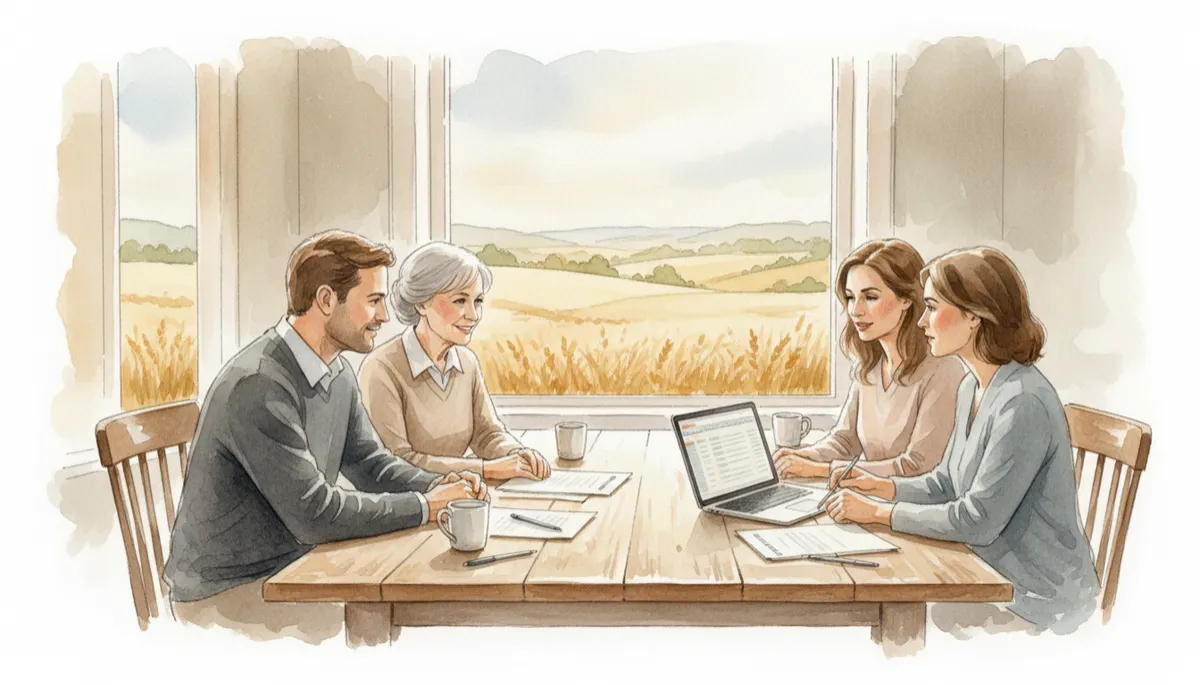
Clear financial planning can turn a difficult sale decision into a thoughtful long-term strategy.
Explore Alternatives to an Immediate Sale
Selling the farm outright is not the only option. Depending on your situation, alternatives may allow you to reduce your workload or financial burden while still preserving some connection to the land. Possibilities include leasing the land to another farmer, entering into a long-term rental agreement, or partnering with a neighbor or young farmer who wants to build their operation.
Some families consider conservation easements or agricultural land trusts, which can permanently protect the land from development while still allowing it to be farmed. Others choose a gradual transition, where one generation slowly steps back as the next takes on more responsibility. Exploring these options helps ensure that, if you do sell, it is because it is truly the right choice—not simply because you felt there were no alternatives.
Prepare Yourself Emotionally for Life After the Farm
Letting go of a generational farm often brings a wave of emotions after the papers are signed. You may feel grief, second-guess your decision, or struggle with a loss of identity if farming has been central to your life. Planning for “what comes next” is just as important as negotiating the sale itself.
Think about how you will stay connected to the land, community, or lifestyle in new ways whether that is volunteering in local agriculture groups, mentoring younger farmers, or simply preserving stories, photos, and family records. Creating a vision for your next chapter can ease the transition and honor the generations who came before you.
Moving Forward with Respect for Legacy and Reality
Deciding whether to sell a family farm that has been owned for generations is rarely simple. By taking time to honor the emotional history, clarify your family’s goals, understand the financial implications, and explore every option, you give yourself the best chance of making a decision you can live with one that respects both your legacy and your present-day reality.
Whatever you decide, remember that the true heart of a family farm is not only the soil, fences, or buildings, but the people and stories that grew there. Those can travel with you, wherever you go next.


