Selling a Family Farm: Key Considerations
Family Farms, Estate Planning, Land Sales
What to Consider Before Selling a Family Farm That Has Been Owned for Generations
Letting go of a family farm is rarely just a financial decision. It is a choice that can reshape your family’s story, legacy, and long‑term security. Before you sign any contract, it is worth slowing down and carefully weighing what is truly at stake.
1. The Emotional Weight of Generations of Ownership
A family farm often carries stories, memories, and identity. It is where grandparents worked the land, children learned responsibility, and family gatherings took place. Selling it can feel like closing a chapter that can never be reopened. Acknowledging this emotional weight is not a weakness; it is part of making a clear‑eyed decision. Give family members the chance to share what the farm means to them, even if you ultimately decide to sell. Sometimes, simply being heard can ease resentment later on.
2. Family Dynamics and Communication
When several siblings, cousins, or extended relatives have a stake formal or informal the decision to sell can quickly become tense. Some may be emotionally attached but live far away. Others may be more focused on financial realities. Before moving forward, clarify:
Who legally owns the farm and in what proportions
Who is currently working or managing the land and buildings
Whether anyone in the next generation wants to continue farming or leasing it
Open, honest conversations possibly with a neutral adviser present can help prevent long‑term rifts and legal disputes after the sale proceeds are distributed.
3. Financial Reality: Debt, Cash Flow, and Retirement Needs
For many families, the farm is their largest asset. Selling can unlock equity to pay off debt, fund retirement, or cover medical and long‑term care costs. Before deciding, take stock of:
Existing mortgages, equipment loans, or liens on the property
Current farm income versus the personal income you actually need
How sale proceeds would be invested to provide long‑term security
A financial planner who understands agricultural assets can help you compare the value of keeping the farm (perhaps leased out) versus selling and diversifying your wealth.
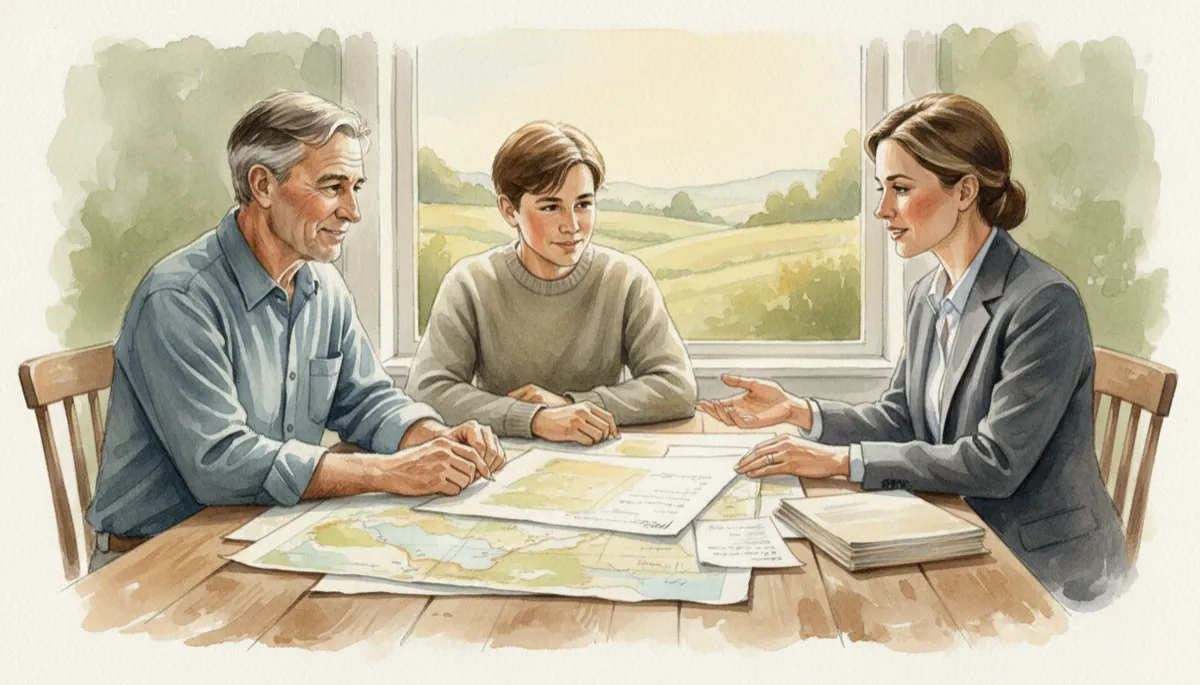
A clear picture of finances helps families weigh selling against other options.
4. Legal Structure, Title, and Tax Implications
Before listing the property, confirm exactly how the farm is owned personally, through a partnership, corporation, or trust. Title issues, old easements, or unclear boundaries can delay or derail a sale. An attorney with experience in agricultural or rural real estate can review deeds, ownership agreements, and any leases on the land or buildings.
Taxes are another critical factor. Depending on how long the farm has been in the family and how it was inherited, there may be significant capital gains or estate tax considerations. In some cases, families may benefit from:
Spreading the sale over time through owner financing or installment payments
Using trusts or other planning tools to manage tax exposure and protect heirs
Exploring conservation easements or charitable strategies that preserve land and offer tax benefits
5. Market Conditions and True Property Value
Land values can vary dramatically based on soil quality, water access, development pressure, and local demand. A neighbor’s offer may be convenient but not necessarily fair. Consider obtaining an independent appraisal and speaking with a real‑estate professional who specializes in farms and rural property. They can help you understand:
Current comparable sales in your region
Potential future uses such as development, solar, or specialty crops that could affect value
Whether selling the farm as a whole or in parcels makes better financial sense
6. Legacy, Land Use, and Alternatives to a Full Sale
Many families struggle with the idea that once the farm is sold, they may never set foot on the land again. If preserving some connection or protecting the land from development matters to you, ask what alternatives exist. Options might include:
Leasing the land to another farmer rather than selling it outright
Selling only part of the acreage and keeping a smaller homestead or parcel
Working with a land trust or conservation organization to protect the property’s agricultural or natural character
Thinking creatively can allow you to meet financial needs while still honoring the generations who came before you.
7. Taking Time to Make a Thoughtful Decision
Selling a family farm that has been owned for generations is one of the most significant decisions many families will ever make. Rushing because of pressure from buyers, banks, or even relatives can lead to regret. Surround yourself with trusted professionals legal, tax, financial, and real‑estate advisers who respect both the numbers and the history behind them.
In the end, the “right” choice is the one that balances emotional ties, family relationships, financial security, and your vision for the future. Giving each of these areas careful thought will help ensure that, whatever you decide, you can look back knowing you honored both the land and the legacy it represents.


