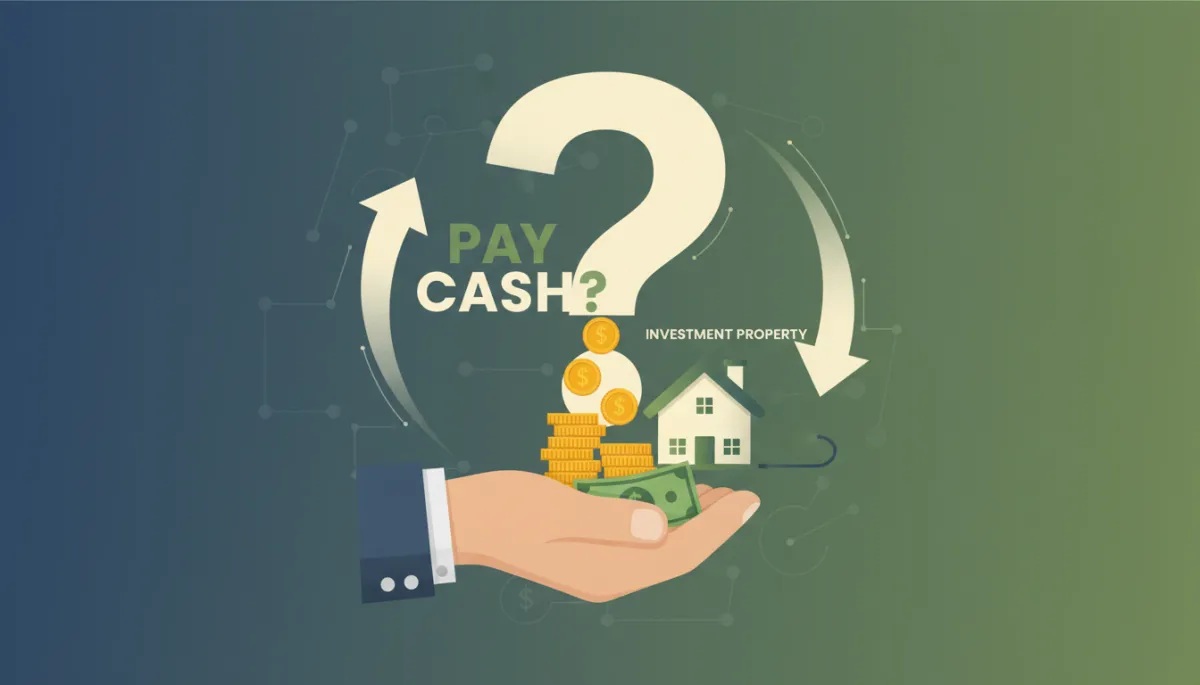
Cash vs. Financing: Investment Property Decisions
Real Estate, Investment Property, Personal Finance
Should You Pay Cash for an Investment Property?
Buying an investment property in cash sounds simple and powerful: no mortgage, no bank, no monthly payment. But is it always the smartest move? Understanding the trade-offs between paying cash and using financing can help you protect your savings, grow your portfolio wisely, and sleep better at night.
The Appeal of Paying Cash for an Investment Property
Paying cash can feel like the most secure option, especially if you dislike debt. When you buy an investment property outright, you immediately gain several advantages:
No monthly mortgage payment: Your rental income is not eaten up by principal and interest, which can improve cash flow from day one.
Less risk of foreclosure: Without a lender, you are not at risk of losing the property because of missed mortgage payments during a vacancy or emergency.
Stronger offers: Sellers often view cash buyers as more reliable, which can help you negotiate a lower purchase price or win in a competitive market.
Simpler closing: No loan underwriting, fewer conditions, and typically a faster closing timeline.
💡 Pro Tip: Even if you plan to pay cash, underwrite the deal as if there were a mortgage. This forces you to check whether the property would still make sense if you needed financing later.
The Hidden Downsides of Paying Cash
While owning a property free and clear is attractive, tying up a large amount of cash in one asset can create new risks. Before you write a six-figure check, consider what you might be giving up.
Reduced diversification: Using most of your savings on a single property may leave you overexposed to one market, one tenant pool, or even one building’s maintenance issues.
Opportunity cost: The cash you put into one property could potentially fund multiple down payments, investments in index funds, or a healthy emergency reserve.
Lower overall returns: Real estate investors often use leverage because a smaller cash outlay can generate a higher percentage return, even after accounting for interest costs.
Limited liquidity: Once your money is in the property, accessing it typically requires a refinance, home equity loan, or sale, none of which are instant or guaranteed.

Comparing cash versus financed scenarios clarifies how each choice affects returns and risk.
When Paying Cash May Make Sense
Paying cash is not automatically wrong. In some situations, it can be a smart, strategic choice. It may be worth considering if:
You have substantial liquid savings left over after the purchase for emergencies, repairs, and personal needs.
Your priority is steady, low-stress income rather than maximizing growth, such as in or near retirement.
You are buying a property that does not qualify easily for traditional financing, but still meets your investment criteria.
You plan to refinance later, using cash now to close quickly and then pull equity out once the property is stabilized.
When Financing Might Be the Better Move
If your goal is to build a portfolio over time, financing often provides more flexibility. A sensible loan can help you:
Buy multiple properties instead of one, spreading risk across different locations and tenant types.
Preserve your cash cushion for vacancies, repairs, personal emergencies, or other investment opportunities.
Potentially enhance returns if the property’s long-term appreciation and income outpace the cost of borrowing.
⚠️ Warning: Leverage amplifies both gains and losses. A conservative loan amount, strong cash flow, and healthy reserves are essential if you choose financing.
So, Should You Pay Cash for an Investment Property?
There is no one-size-fits-all answer. Paying cash can offer peace of mind, stronger cash flow, and fewer moving parts. Financing can help you scale, diversify, and potentially boost long-term returns. The best choice depends on your risk tolerance, time horizon, access to capital, and overall financial plan.
If using cash would leave you stretched thin, overly concentrated in one property, or unable to handle a surprise expense, it may be wiser to keep some leverage in the mix. If, on the other hand, your top priority is stability and simplicity, and you can comfortably afford it, a cash purchase can be a powerful way to secure long-term rental income.
Call to Action: Clarify Your Strategy Before You Commit
Before you decide to pay cash for an investment property, take a step back and look at the bigger picture. Run the numbers for both cash and financed scenarios, stress-test your budget, and think about where you want your portfolio to be in five, ten, or twenty years.
If you are unsure which path fits your goals, consider speaking with a qualified financial or real estate advisor who understands investment properties. A brief strategy session can help you avoid costly mistakes and move forward with confidence.
Ready to explore your options? Start by outlining your ideal investment outcome, your available cash, and your comfort level with debt. From there, you can choose the approach cash, financing, or a blend of both that truly supports your long-term financial freedom.
John Meier is a local real estate agent in Warrenton, MO (63383) helping sellers in Warrenton, Truesdale, and Wright Cityprepare their homes to shine for every showing.
Westplex Real Estate
📞(636) 242-5365
🌐JohnMeierSells.com


