
Is a One-Level Home Ideal for Retirement Living?
Retirement Living, Home Design
Is a One-Level Home Better for Retirement?
Choosing the right home for retirement is about more than style or location. It is about comfort, safety, and how well your space will support you as your needs change. One of the biggest decisions many retirees face is whether a one-level home is truly the better option for their later years.
The Appeal of a One-Level Home in Retirement
As we age, everyday tasks that once felt effortless can become more demanding. Stairs, in particular, are a common concern. A one-level home removes the need to constantly move between floors, keeping your bedroom, bathroom, kitchen, and living spaces on the same level. This simple change can make your home feel more manageable and less tiring, especially if you plan to stay active and independent for as long as possible.
Safety and Accessibility: Planning for Future Mobility
Safety is one of the strongest arguments in favor of a one-level home for retirement. Falls on stairs are a major cause of injury for older adults. By eliminating interior staircases, you reduce a key risk factor and make it easier to move around your home with confidence. A single-story layout also tends to be more adaptable for mobility aids, such as walkers or wheelchairs, if they become necessary later on.
Features like wider hallways, step-free entries, and bathrooms that can accommodate grab bars or walk-in showers are often easier to incorporate in a one-level design. Even if you do not need these features right now, choosing a home that can be modified without major structural changes can save stress and expense in the future.
💡 Pro Tip: When touring potential homes, imagine moving through the space with limited mobility. If you had a cane or walker, could you easily reach the bedroom, bathroom, and kitchen without obstacles?
Everyday Convenience and Reduced Housework
Retirement often comes with a desire to simplify life, and a one-level home can support that goal. Without stairs, laundry, cleaning supplies, and daily essentials do not need to be hauled up and down. You can keep everything you use most within easy reach, which reduces physical strain and makes household chores more manageable as you age.
A single-story layout can also encourage you to use your entire home, rather than abandoning upper floors that feel inconvenient or unsafe. Having all rooms accessible on one level means that guest spaces, hobby areas, and quiet reading nooks remain part of your everyday life, instead of becoming forgotten corners that collect dust.
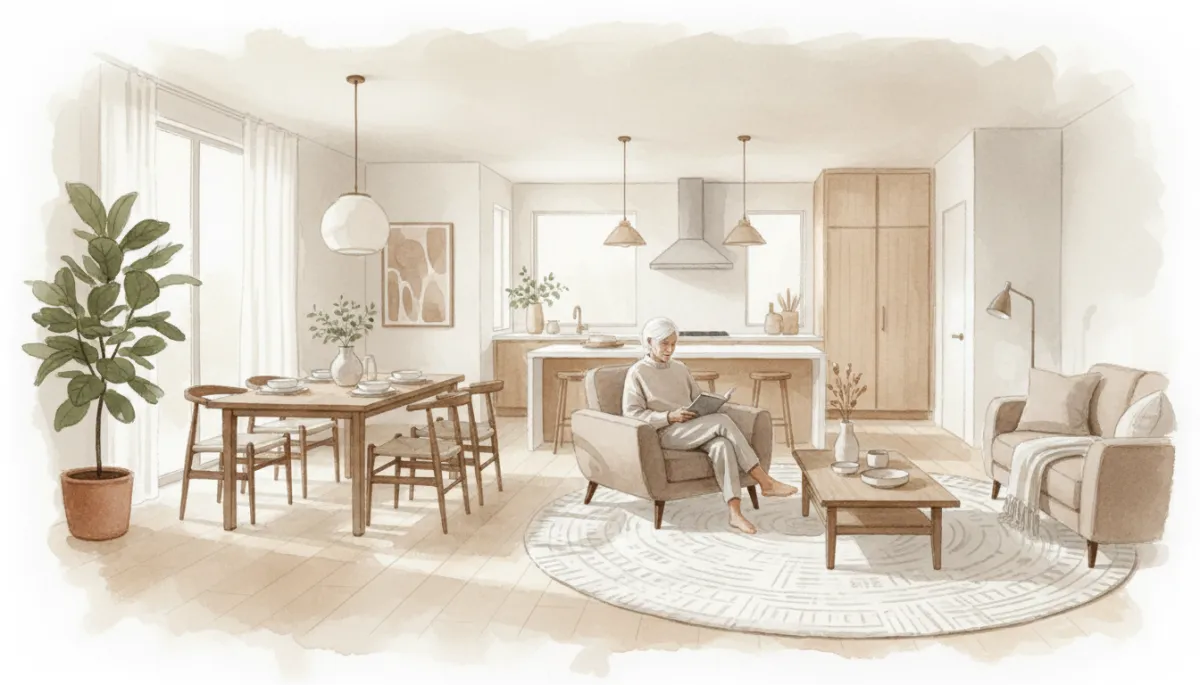
Open, single-level layouts keep everyday living simple, safe, and easy to navigate.
Cost, Maintenance, and Resale Considerations
Whether a one-level home is better for retirement also depends on your budget and long-term plans. In some markets, single-story homes can be more expensive per square foot because they require a larger footprint. However, they may offer savings in other ways. Exterior maintenance, such as gutter cleaning or window washing, can be easier and safer when everything is reachable without tall ladders. Heating and cooling may also be more efficient in a compact, single-level design.
From a resale perspective, accessible one-level homes tend to appeal to a wide range of buyers, including young families, people with mobility challenges, and fellow retirees. This broad appeal can be an advantage if you ever decide to move again or if your home becomes part of your estate planning strategy.
When a Multi-Level Home Might Still Work
Although one-level homes have clear advantages, they are not the only option for retirement. If you already own a multi-level house that you love, you may be able to adapt it. Creating a main-floor living suite with a bedroom, full bathroom, and laundry can allow you to live primarily on one level, using the upper floor only occasionally. In some cases, stairlifts or home elevators can also make stairs safer and more manageable, though these solutions come with additional cost and maintenance.
The key is to be realistic about your health, your financial situation, and your willingness to renovate. If modifications would be extensive or expensive, it may be more practical to seek a one-level home that already aligns with your long-term needs.
So, Is a One-Level Home Better for Retirement?
For many people, the answer is yes. A one-level home often offers greater safety, easier accessibility, and more day-to-day comfort as you age. It can reduce the physical demands of housework, support future mobility needs, and provide peace of mind that your home will continue to work for you in the years ahead. However, the “best” choice ultimately depends on your personal preferences, budget, health, and how long you plan to stay in the home.
As you plan for retirement, consider not just where you want to live, but how you want to live. Touring single-story homes, speaking with a trusted real estate professional, and thinking through possible future scenarios can help you decide whether a one-level home is the right foundation for your next chapter.


