
Living Near Farms: What Buyers Need to Know
Home Buying, Rural Living, Agricultural Properties
What Buyers Should Know About Living Near Agricultural Operations
Thinking about a home in the country or on the edge of town? Living near farms can be peaceful and rewarding, but it also comes with unique realities every buyer should understand before signing on the dotted line.
Everyday Realities: Sights, Sounds, and Smells
Agricultural operations are working businesses, not scenic backdrops. That means you can expect:
Noise: Tractors, combines, grain dryers, and trucks may run early in the morning, late at night, and seasonally around planting and harvest time.
Odors: Manure application, livestock barns, and fertilizer can create strong, sometimes lingering smells, especially in warm or humid weather.
Dust and Debris: Tilling, harvesting, and gravel roads can kick up dust; you may also see chaff, feathers, or insects more frequently than in suburban neighborhoods.
💡 Pro Tip: Visit the property at different times of day and in different seasons if possible. A quiet winter afternoon can feel very different from a busy fall harvest night.
Understanding “Right to Farm” and Local Regulations
Many states and counties have “Right to Farm” laws that protect established agricultural operations from nuisance complaints. Practically, this means that if you move next to a working farm, you may have limited recourse for typical farming activities such as:
Odors from livestock or manure management
Noise from equipment and grain handling
Nighttime or early-morning field work during critical seasons
Before you buy, review local zoning maps, county ordinances, and any disclosures about nearby confined animal feeding operations (CAFOs) or large commercial farms. A knowledgeable real estate professional can help you track down this information and interpret what it means for your lifestyle and resale value.
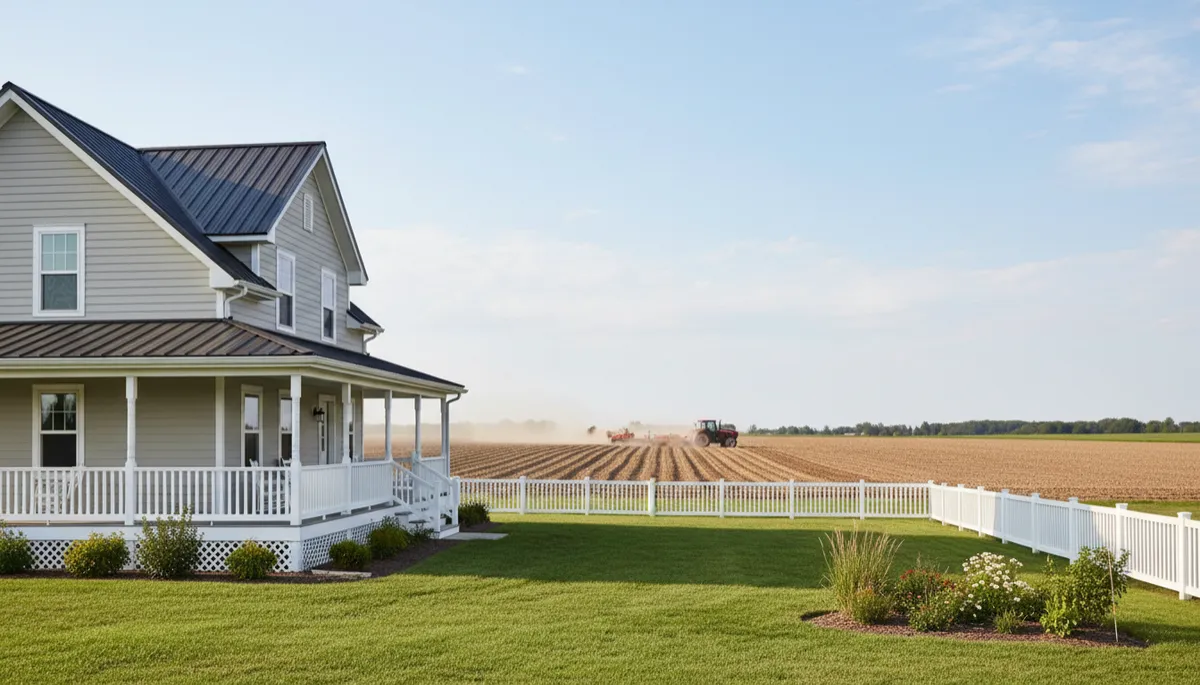
Property lines near fields require realistic expectations about dust, noise, and seasonal activity.
Chemicals, Spraying, and Environmental Considerations
Modern agriculture often involves the use of fertilizers, herbicides, and pesticides. While farmers must follow regulations and label directions, buyers should still consider:
Spray Drift: Wind can carry chemicals beyond the field edge. Ask where spraying typically occurs relative to your home, garden, or play areas.
Water Sources: If the property uses a well, consider testing water quality regularly, especially if fields slope toward your home.
Pets and Gardens: You may need to plan fencing, buffer plantings, or timing outdoor activities around spray schedules.
📌 Key Takeaway: Ask direct questions about spraying practices, typical timing, and any existing buffers or easements near your potential home.
Traffic, Access, and Seasonal Congestion
Rural roads near farms can feel quiet most of the year, then suddenly busy when it is time to plant or harvest. Expect:
Slow-moving equipment on the road, especially at dawn and dusk
Grain trucks and livestock trailers increasing traffic near elevators or processing facilities
Potential wear and tear on gravel roads that may affect your vehicle and commute times
The Upside: Views, Space, and Community
Despite the challenges, many buyers love living near agricultural operations. You may enjoy:
Open views, beautiful sunsets, and a stronger connection to the land
Fewer close neighbors and more privacy than in dense subdivisions
A tight-knit rural community where people look out for one another
The key is going in with clear expectations and good information so the lifestyle matches what you and your family truly want.
Make an Informed Move with Local Guidance
Every agricultural area is different. Proximity to livestock barns, the size of neighboring operations, and local regulations can all dramatically shape your experience. Partnering with an agent who understands both real estate and local farming practices can help you avoid surprises and choose a property that fits your comfort level.
Contact John Meier – Westplex Real Estate today to start planning your move:
📞 Call or text: (636) 242-5365
🌐 Visit: JohnMeierSells.com


