
Living Near Farms: What Buyers Need to Know
Real Estate, Rural Living, Agricultural Properties
What Buyers Should Know About Living Near Agricultural Operations
Considering a home in the country or on the edge of town? Living near farms, fields, and livestock operations can be rewarding, but it also comes with unique realities every buyer should understand before making an offer.
The Everyday Realities of Farm Country
Agricultural operations are working businesses, not just scenic backdrops. That means sights, sounds, and smells that may feel unusual if you are used to suburban or city living. Tractors, combines, and trucks may run early in the morning or late into the night, especially during planting and harvest seasons. Dust from plowing, harvesting, or gravel farm roads can drift onto nearby properties, and livestock operations may produce noticeable odors at certain times of year or weather conditions.
None of this is necessarily negative, but it is important to be realistic. If you dream of quiet country sunsets, be sure you are also comfortable with the seasonal hustle that keeps local farms in business. Talk to nearby residents, visit the property at different times of day, and ask your agent what types of operations are active in the surrounding area.
Right-to-Farm Laws and Your Expectations
Many states and counties have right-to-farm laws designed to protect existing agricultural operations from complaints by new neighbors. These rules often recognize normal farm activities like operating machinery, spreading manure, or using pesticides and fertilizers as acceptable, even if they create noise, dust, or odors that nearby homeowners might find inconvenient.
As a buyer, that means you may have limited recourse if you move next to an existing farm and later decide you do not like the activity. Before you buy, it is wise to review local ordinances and disclosures, understand what types of operations are protected, and clarify with your real estate professional how these laws apply to the property you are considering. Going in with clear expectations can prevent frustration down the road.
Odors, Chemicals, and Environmental Considerations
Modern agriculture uses a variety of tools to manage crops and livestock, including fertilizers, herbicides, pesticides, and manure applications. These practices are typically regulated and carefully managed, but they can still affect your day-to-day experience. You may occasionally notice chemical smells after fields are sprayed or strong odors when manure is applied or livestock pens are cleaned.
Buyers who are sensitive to allergens, have respiratory issues, or are particularly concerned about environmental impacts should ask questions in advance. Inquire about:
Typical spraying schedules and types of crops nearby
Proximity to large livestock facilities, lagoons, or manure storage
Drainage patterns, nearby creeks, and low-lying areas that may collect water
Understanding these factors helps you decide whether a specific property is a good fit for your health preferences and lifestyle, while still respecting the essential role local farms play in the community and economy.
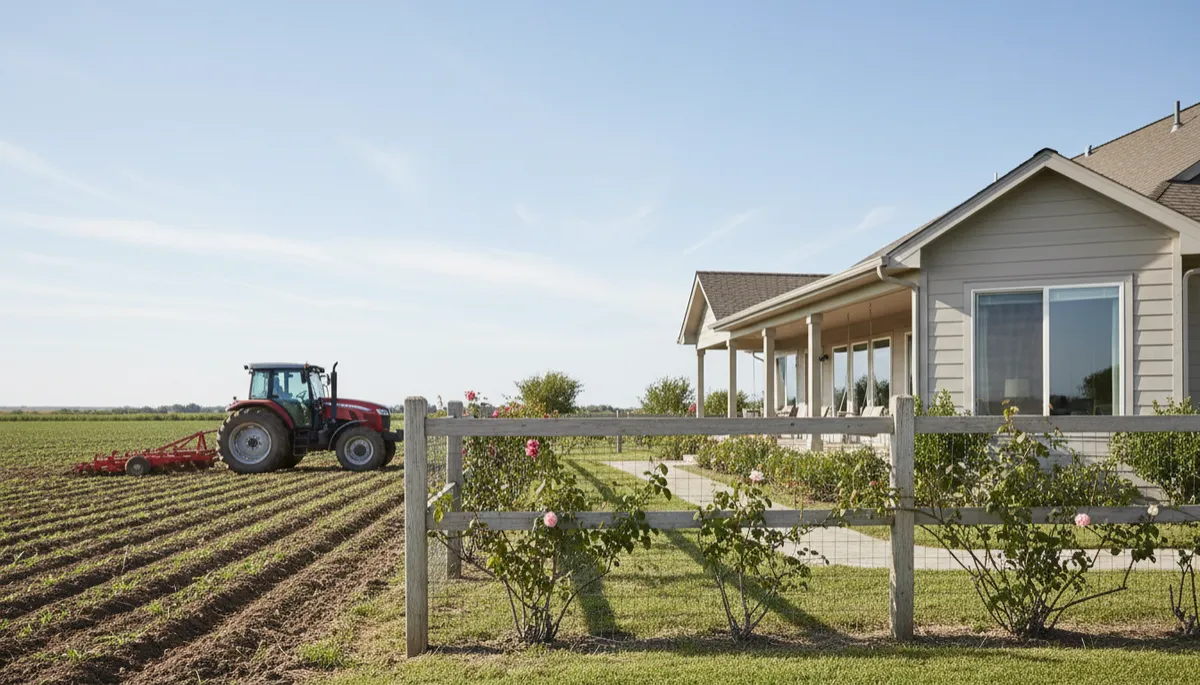
Visiting at different seasons reveals how nearby farm work affects daily life.
Property Values, Views, and Future Development
One of the biggest attractions of living near agricultural land is the open space wide views, fewer neighbors, and a strong sense of privacy. However, farmland can change hands, and zoning can evolve over time. A quiet crop field today could become a more intensive livestock operation, a large storage facility, or even a future residential subdivision, depending on local plans and market conditions.
Smart buyers look beyond what they see today. Check county zoning maps, long-range land-use plans, and any pending development proposals. Ask your agent whether there are conservation easements, agricultural districts, or other protections that might keep land in farming long term. This research can help you gauge how stable your views, traffic levels, and overall neighborhood character are likely to be over the years you plan to own the home.
Roads, Traffic, and Safety Around Farm Equipment
Rural roads often serve both residents and farm equipment. Large tractors, combines, and grain trucks move slowly and may take up more than one lane, especially on narrow, shoulderless roads. During busy seasons, you might encounter more traffic than you expect in a rural setting, and dust or mud on the roadway can be common near field entrances.
If you have young drivers in the household, commute at early hours, or plan to walk, bike, or ride horses along local roads, it is worth considering how comfortable you are sharing the road with farm vehicles. Observing the area during peak farming times can offer valuable insight into daily patterns and safety considerations.
The Upside: Community, Fresh Food, and Open Space
Despite the extra considerations, many buyers find that living near agricultural operations offers significant rewards. You may enjoy easier access to farm stands, local meat and produce, and seasonal events like pumpkin patches or u-pick orchards. The landscape often feels more open and natural, with starry night skies and a slower overall pace than dense suburban neighborhoods.
Building positive relationships with nearby farmers and landowners can also enhance your experience. A friendly conversation can go a long way toward understanding seasonal routines, planned changes, and how to be a respectful neighbor in a working rural environment. When expectations are clear, living near agriculture can deliver exactly the blend of space, community, and connection to the land that many buyers are seeking.
Plan Your Move with Local Expertise
If you are considering a home near farms or other agricultural operations, working with an agent who understands rural properties and local regulations is essential. From reviewing disclosures and zoning to helping you evaluate long-term neighborhood changes, the right guidance can make your decision clearer and more confident.
Contact John Meier – Westplex Real Estate today to start planning your move:
📞 Call or text: (636) 242-5365
🌐 Visit: JohnMeierSells.com


