Driveway Replacement Cost: Budgeting Tips
Home Improvement, Driveway Replacement
How Much Does It Cost to Replace a Driveway?
Replacing a worn or cracked driveway can dramatically improve curb appeal and everyday convenience but it’s also a major investment. Understanding what drives the price helps you plan a realistic budget and avoid surprises when quotes start coming in.
Typical Price Range to Replace a Driveway
For a standard residential driveway, most homeowners can expect to spend somewhere between $3,000 and $10,000 to fully remove and replace it, depending on size and material. National cost guides suggest many projects land around $4,500 to $7,000 for an average two-car driveway, but prices can be lower or higher based on your choices and location (HomeAdvisor, Angi, Forbes).
Because costs are strongly tied to material and square footage, it’s often more helpful to think in terms of price per square foot. Current averages for replacement (removal plus new installation) typically fall into these ranges:
Asphalt: about $3–$10 per square foot (many guides cluster around $3–$7 for basic projects)
Concrete: roughly $4–$15 per square foot, depending on thickness and finish
Pavers: generally $10–$30+ per square foot, especially for intricate patterns or premium stone
To estimate your own project, multiply the material range by your driveway’s size. For example, a 20-by-40-foot driveway (800 square feet) could cost:
Asphalt: about $2,400–$8,000
Concrete: roughly $3,200–$12,000
Pavers: approximately $8,000–$24,000+
What Affects the Cost of Replacing a Driveway?
1. Driveway Size and Layout
The larger the driveway, the more you’ll pay simply because you’re using more material and more labor hours. Straight, rectangular driveways are the most economical. Curves, turnarounds, or extra parking pads add square footage and complexity, which raises the price per job, if not the per-square-foot rate itself.
2. Material Choice: Asphalt, Concrete, or Pavers?
Asphalt is usually the budget-friendly choice up front. It’s flexible in colder climates and quicker to install, but it will need periodic sealing and may not last as long as concrete or pavers.
Concrete costs more initially but offers a clean, long-lasting surface. Thicker slabs, rebar reinforcement, and decorative finishes (like stamping or coloring) push concrete toward the higher end of the price range, yet many homeowners appreciate the low day-to-day maintenance.
Pavers are typically the premium option. They deliver a high-end, custom look and make spot repairs easier individual pavers can be replaced without redoing the entire surface. However, the combination of material cost and labor-intensive installation makes paver driveways the most expensive to replace.
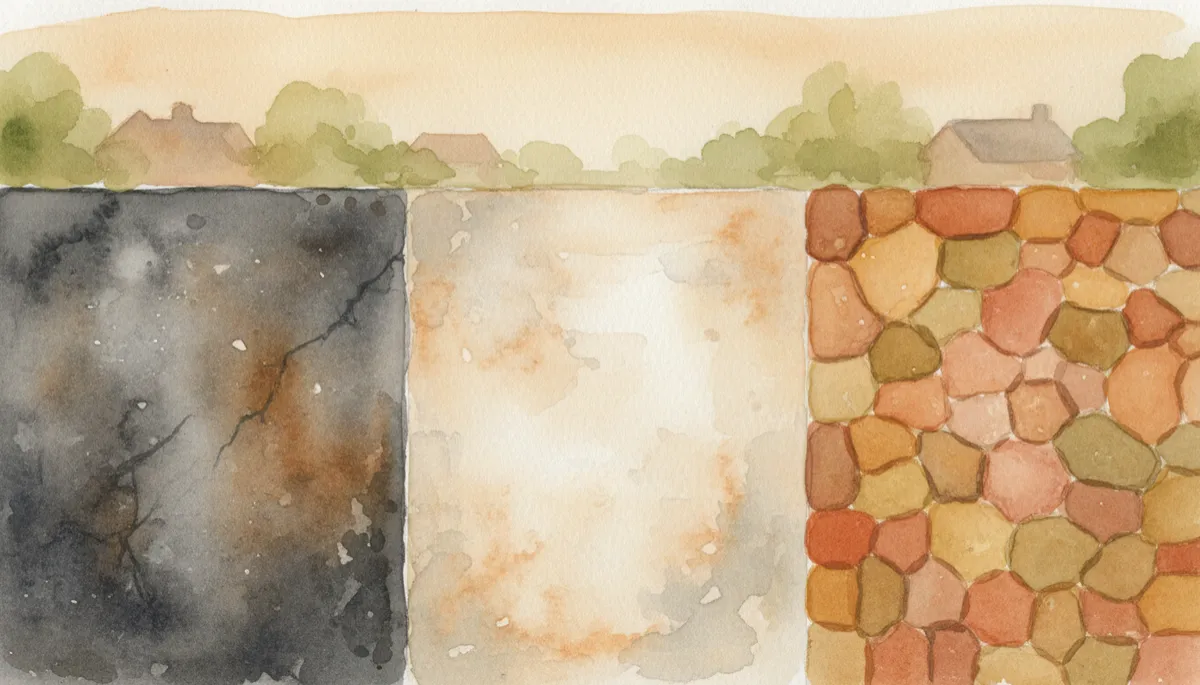
Material choice can easily double or triple your total driveway replacement cost.
3. Labor, Removal, and Site Preparation
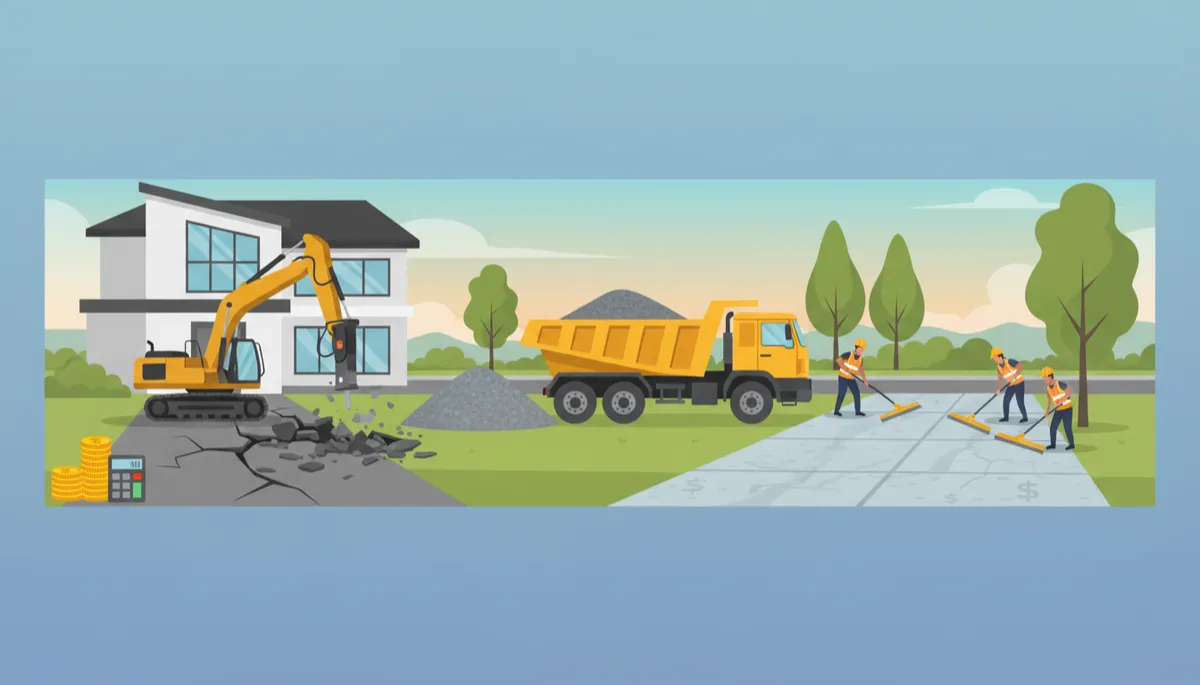
Replacing a driveway is more than just pouring or laying new material. Contractors must demolish and haul away the old surface, grade the site for proper drainage, and install a stable base layer. If the existing driveway has deep cracks, sinking areas, or drainage issues, extra excavation and base work may be required and that adds to the bill.
Labor rates vary widely by region. Areas with higher costs of living or strong construction demand generally see higher prices per square foot, even for the same type of driveway.
4. Permits, Access, and Extras
Some municipalities require permits or inspections for driveway replacement, especially if you’re changing the size, slope, or connection to the street. Permit fees are often modest compared to the full project cost, but they’re important to factor into your budget.
Hard-to-access sites, long driveways, or locations that require special equipment can also increase pricing. Add-ons like heating systems (for snow melt), decorative borders, or integrated drainage channels will push costs higher but may be worthwhile in certain climates or neighborhoods.
Planning for Future Costs and Getting Accurate Quotes
Material and labor prices change over time with inflation, fuel costs, and supply chain issues. Current guides suggest asphalt, concrete, and paver driveways generally fall between $3 and $30 per square foot, depending on the option you choose, but the numbers in your area in 2026 and beyond may be different. That’s why the most reliable way to know what your project will cost is to gather multiple written estimates from reputable local contractors close to your planned start date.
💡 Pro Tip: When comparing quotes, make sure each contractor includes the same scope demolition, disposal, base preparation, permits, and any decorative finishes so you’re truly comparing apples to apples.
In summary, the cost to replace a driveway depends most on size, material, and local labor rates. Use the national ranges as a starting point, then refine your expectations with on-site evaluations and detailed bids. With a clear understanding of what drives the price, you can choose a driveway that fits both your budget and your long-term plans for your home.


