Cost of Owning a Home on Acreage
Real Estate, Acreage Homes
How Much Does It Cost to Own a Home on Acreage?
Dreaming of a wide-open backyard, space for a garden, or even a few animals? A home on acreage can offer all of that, but it also comes with a unique set of costs. While no one can predict exact prices for 2026, you can get very close to a realistic budget by understanding the main expenses that come with owning a home on land.
Why Acreage Costs Are So Hard to Pin Down
Unlike a typical suburban lot, acreage properties vary dramatically. A three-acre parcel on the edge of a small town with utilities at the road will cost very differently from 40 rural acres with a long gravel driveway and multiple outbuildings. On top of that, wider housing trends, interest rates, and inflation all influence what you will actually pay.
Recent housing market reports show that price growth has cooled compared with the frenzied years of 2020–2022, but affordability is still heavily affected by higher mortgage rates (Forbes, U.S. Housing Market Trends 2023). Interest rates directly shape your monthly payment, which means the same acreage home can feel affordable one year and out of reach the next (Investopedia).
The Big Cost Drivers of an Acreage Home
1. Location and Land Value
Location is the single biggest factor in what you will pay. Demand for larger lots has grown as remote work lets more people move away from city centers, and experts expect that trend to continue into the mid-2020s (Forbes Real Estate Council). That means acreage in commutable or high-amenity areas often commands a premium, while very remote parcels may be cheaper per acre but more expensive to improve and maintain.
2. The Home Itself: Size, Age, and Condition
A modern, energy-efficient home with updated systems will usually cost more upfront but less to run. An older farmhouse might come with charm and a lower purchase price, but you could face higher heating bills, septic repairs, or a new roof sooner than you expect. As sustainability becomes more important to buyers, acreage homes with solar panels, efficient windows, and good insulation may hold value better (Green Building Advisor).
3. Financing and Interest Rates
Your mortgage interest rate can add or subtract hundreds of dollars per month from the cost of owning acreage. Because many buyers stretch for their “forever property,” even a one-point change in rates has a big impact on the overall budget. Monitoring forecasts from sources like Zillow Economic Research or the National Association of Realtors can help you time your purchase more strategically, even if no one can give you a precise 2026 price tag today.
Ongoing Costs You Should Never Overlook
The purchase price is only the beginning. To understand what it really costs to own a home on acreage, you need to account for ongoing expenses that are often higher than for a standard city lot.
Property taxes: More land and higher assessed values usually mean larger tax bills. Rural tax rates may be lower, but the total can still surprise buyers moving from smaller city lots.
Insurance: You may need additional coverage for barns, workshops, fencing, or even livestock. Fire risk, distance from a fire station, and weather exposure can all affect premiums.
Utilities and services: Well and septic maintenance, propane deliveries, or backup generators can add costs you may not have in town. A long driveway might require extra snow removal or gravel.
Maintenance and equipment: Mowing, tree work, fencing, and road grading all take time or money. Many acreage owners eventually invest in a riding mower, tractor, or utility vehicle, which can add thousands to the true cost of ownership.
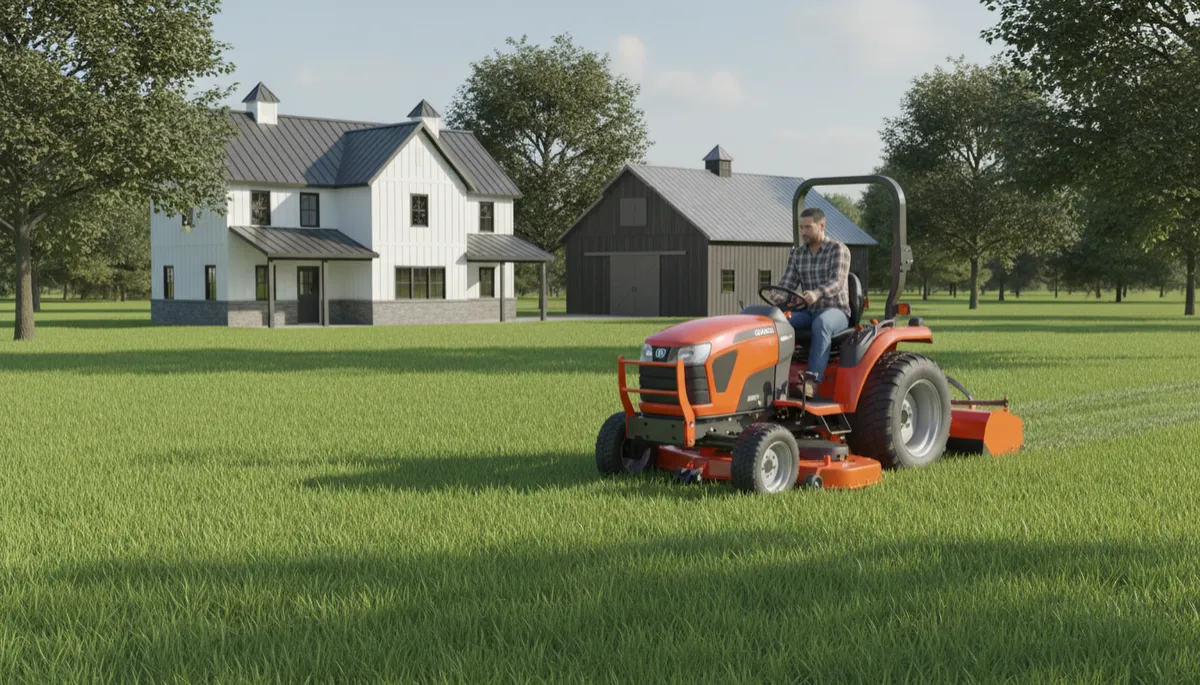
Equipment, fuel, and upkeep can turn routine land care into a major annual expense.
How to Build a Realistic Acreage Budget
Because national “average price” figures for acreage homes are hard to interpret and impossible to project precisely for 2026, your best strategy is to build a bottom-up budget tailored to your target area and lifestyle.
Start with local data: Use tools from Redfin, Zillow, and local MLS reports to see recent sales of acreage homes that match your size and distance-to-town preferences.
Talk to a local agent: An agent who regularly works with acreage can flag hidden costs—like private road agreements, water rights, or zoning limits—that don’t show up in a quick online search.
Estimate “land lifestyle” expenses: Add line items for equipment, fuel, tree work, fencing, animal care (if relevant), and higher utility needs. Many owners find that these costs rival or exceed what they saved by moving farther out.
Stress-test your mortgage: Run scenarios with slightly higher interest rates and property taxes to see if your budget still works if the market shifts before or after you buy.
💡 Pro Tip: Before you buy, spend time on similar properties—walk the land, note the noise, wind, and drive time. Then match what you experience to a written budget so your dream acreage feels sustainable, not stressful.
Is Acreage Living Worth the Cost?
For many buyers, the answer is yes especially as remote work, privacy, and sustainable living remain top priorities. Acreage homes can offer gardens, small-scale farming, space for hobbies, and the chance to live closer to nature. With careful planning, realistic expectations, and solid local guidance, you can understand not just what a home on acreage costs to buy, but what it will truly cost to own year after year.


