Cash Offer vs. Traditional Sale: Key Differences
Real Estate, Home Selling
Cash Offer vs. Traditional Sale: What Is the Difference?
Deciding how to sell your home can feel overwhelming. Two of the most common options are accepting a cash offer or listing your property for a traditional sale on the open market. Understanding how these approaches differ in speed, certainty, price, and effort can help you choose the path that best fits your goals, timeline, and stress tolerance.
What Is a Cash Offer?
A cash offer is when a buyer purchases your home without using a mortgage loan. Instead of waiting for a lender’s approval, the buyer uses funds they already have available often from savings, an investment company, or a professional home-buying firm. Because there is no lender involved, the process is typically faster and involves fewer conditions.
Cash buyers might be:
Individual buyers who have the funds available
Investors looking for rental properties or flips
Professional home-buying companies offering “as-is” purchases
What Is a Traditional Sale?
A traditional sale is the familiar process of hiring a real estate agent, listing your home on the multiple listing service (MLS), marketing it to the public, and negotiating with buyers who usually rely on mortgage financing. This route is designed to attract the widest pool of potential buyers and, ideally, the highest sale price the market will support.
Traditional sales often involve:
Preparing the home with cleaning, repairs, or upgrades
Professional photos, open houses, and showings
Buyer inspections, appraisals, and lender requirements
Cash Offer vs. Traditional Sale: Key Differences
While both paths lead to selling your home, the experience can be very different. Here are the main ways a cash offer compares to a traditional sale.

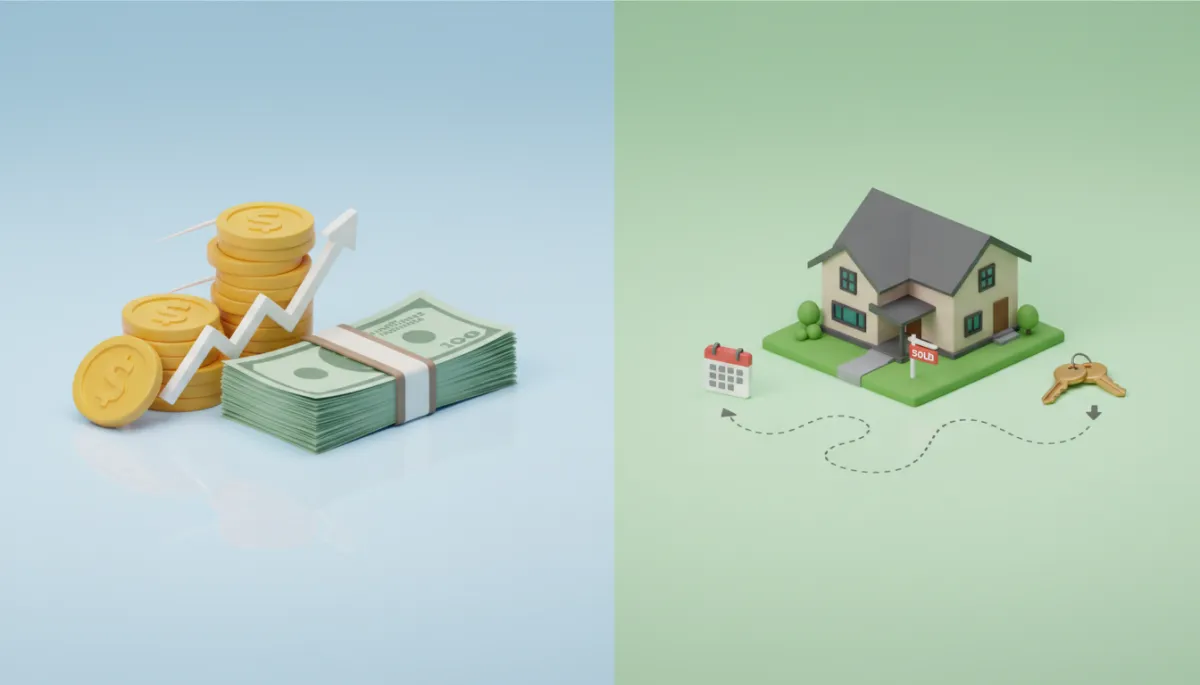
Different selling paths balance speed, certainty, and potential sale price.
1. Speed of the Transaction
Cash offer: Because there is no mortgage approval, closings can happen in as little as a week or two, depending on local requirements and how quickly paperwork is completed. This can be especially helpful if you are relocating, facing financial pressure, or need certainty on timing.
Traditional sale: Even after accepting an offer, it often takes 30–60 days to close while the buyer’s lender orders an appraisal, verifies income, and clears conditions. If issues arise, the closing date can be delayed or the deal can fall apart entirely.
2. Certainty and Risk
Cash offer: With no financing contingency, there is less risk of the sale collapsing at the last minute. Many cash buyers also buy “as-is,” meaning they are less likely to demand repairs or credits after inspections, which reduces surprises and renegotiations.
Traditional sale: Traditional buyers commonly include inspection and financing contingencies. If the appraisal comes in low, or the buyer’s loan is denied, you may need to renegotiate or put your home back on the market, costing you time and potentially money.
3. Sale Price and Net Proceeds
Cash offer: Cash buyers often expect a discount in exchange for convenience and speed. The offer price may be lower than what you could achieve on the open market. However, you might save on repairs, holding costs (like mortgage payments, taxes, and utilities), and some fees, which can narrow the gap.
Traditional sale: Listing your home typically gives you the best chance of securing the highest sale price, especially in a competitive market. On the other hand, you will likely pay agent commissions, invest in prep work, and carry the property longer while you wait for the right buyer.
4. Effort, Stress, and Privacy
Cash offer: Many cash buyers streamline the process: no staging, fewer showings, and minimal disruption to your daily life. This can be particularly appealing if you have young children, pets, or a busy household, or if you simply want to avoid the stress of public showings.
Traditional sale: To attract top-dollar offers, you may need to keep your home “show-ready” for weeks, host open houses, and allow potential buyers to tour your property, sometimes on short notice. While this effort can pay off in price, it does require more time, energy, and privacy trade-offs.
How to Decide Which Option Is Right for You
When weighing a cash offer vs. a traditional sale, start with your priorities. If you value speed and certainty above all else, and are comfortable accepting a potentially lower price, a cash offer may be the better fit. If maximizing your sale price is more important and you have time to navigate showings and negotiations, a traditional listing might serve you best.
In some cases, it can be helpful to request both: explore cash offers while also speaking with a trusted real estate professional about what your home could sell for on the open market. Comparing your net proceeds, not just the headline price, will give you the clearest picture of which path truly benefits you.
Contact John Meier – Westplex Real Estate today to start planning your move:
📞 Call or text: (636) 242-5365
🌐 Visit: JohnMeierSells.com


