
Buying Wooded Property in Warren County: Key Tips
Real Estate, Land Buying, Wooded Property
What Should You Know Before Buying Wooded Property in Warren County?
Wooded property in Warren County can offer privacy, natural beauty, and long-term value but only if you understand the land before you buy. Here’s what to consider so you can purchase with confidence instead of surprises.
Understand Zoning, Land Use, and Future Plans
Before you fall in love with a quiet tract of woods, confirm how the land is legally allowed to be used. In Warren County, zoning determines whether your property can host a single-family home, a cabin, agricultural uses, or only limited recreational activities. Check with the county planning or zoning office to verify:
Current zoning designation and permitted uses (residential, agricultural, conservation, etc.)
Minimum lot size and building setbacks from property lines and streams
Any overlay districts, conservation rules, or restrictions on clearing trees
It’s also smart to review Warren County’s comprehensive plan and nearby development proposals. A property that feels remote today could be near a future subdivision, commercial corridor, or infrastructure project. Knowing what may be built around you helps you decide whether the long-term setting matches your goals.
Access, Road Maintenance, and Legal Rights of Way
Wooded parcels in Warren County often sit off smaller roads or behind other properties. Never assume you have legal access just because there’s a visible trail or gravel lane. Confirm:
Whether the road is public or private, and who maintains it in all seasons
That any driveway or access lane is recorded as an easement or part of your deed
If emergency services, delivery trucks, and construction equipment can realistically reach the site
Steep grades, narrow switchbacks, and low-hanging branches can all add cost if you need to improve access. Ask neighbors how the road holds up after heavy rain or snow local insight is invaluable in a county with varied terrain and weather.
Soil, Septic, and Water: Can You Build and Live There?
On wooded land, the question isn’t just “Can I build?” but “Can I support a home long-term?” In much of Warren County, you’ll likely rely on a private well and septic system. That makes soil and water conditions critical. Before closing, consider:
A professional soil test or perc test to confirm septic suitability and size requirements
Whether the best building site is on a slope, near rock outcrops, or in a low-lying area prone to standing water
Distance to existing utilities and the cost of running electric or internet to a secluded site
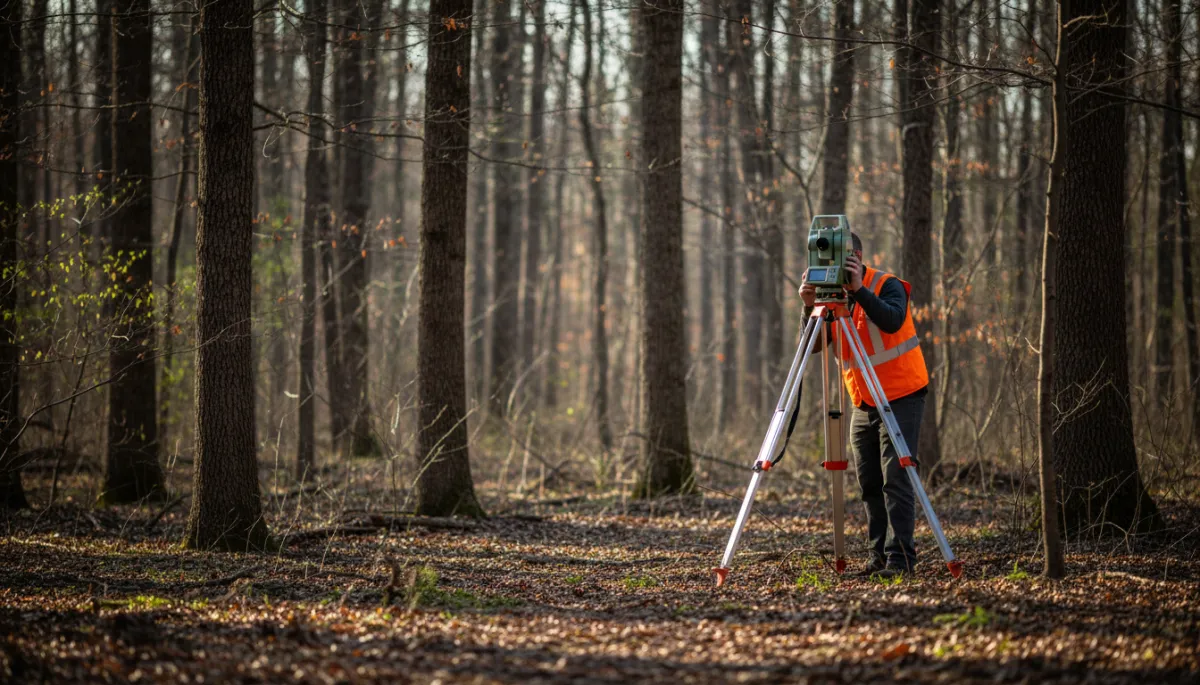
Professional surveys and soil tests reveal buildable areas and potential red flags early.
A property that looks perfect from the road can quickly become expensive if the only suitable building spot requires extensive grading, tree removal, or engineered systems. Factor these potential costs into your offer, not after you own the land.
Boundaries, Easements, and Timber Value
In heavily wooded areas, property lines are rarely obvious. Old fences, paint blazes, or worn paths may not match the legal survey. Before you buy, it’s wise to:
Order a boundary survey or have an existing survey updated and marked on the ground
Review the deed for utility easements, shared driveways, or rights-of-way for neighboring landowners or timber companies
Ask whether any timber has been recently harvested, and if future cutting is restricted by contract or conservation agreement
Mature hardwoods can add value, but they shouldn’t be your only financial justification for the purchase. Timber markets fluctuate, and responsible harvesting must align with county rules, environmental considerations, and your long-term vision for the property.
Wildlife, Neighbors, and Everyday Practicalities
One of the joys of owning wooded land in Warren County is abundant wildlife deer, turkey, songbirds, and more. But it’s important to understand how that interacts with your plans. If you intend to garden, keep bees, or landscape heavily, you’ll need to think about fencing, deer pressure, and local hunting activity. Talk with neighbors about:
Typical hunting seasons and any informal agreements about access or posted land
Road noise, seasonal traffic, and how busy the area becomes during tourism peaks or fall foliage
Cell service, internet options, and winter driving conditions in that part of the county
Visiting the property at different times of day and in different weather especially after a heavy rain can reveal drainage patterns, noise levels, and how much light actually filters through the canopy to potential building sites.
Work With Local Professionals Who Know Warren County
Finally, surround yourself with people who understand both wooded land and Warren County specifically. A local real estate agent experienced in land transactions, a surveyor, and a soil or septic professional can help you spot issues that aren’t obvious on a casual walk through the trees. Their input turns a beautiful piece of land into a well-informed investment.
Buying wooded property here can be deeply rewarding, whether you’re dreaming of a full-time home, a weekend retreat, or a long-term legacy for your family. By carefully checking zoning, access, utilities, boundaries, and everyday livability before you buy, you give yourself the best chance to enjoy Warren County’s woods for years to come without costly surprises after closing.


