
Buying Property with a Well: Key Considerations
Real Estate, Private Wells
What Should You Know Before Buying Property With a Well?
A private well can be a valuable asset, but it also comes with unique responsibilities and potential risks. Understanding how wells work, what to inspect, and which questions to ask can help you make a confident decision before you sign on the dotted line.
Understand How Private Wells Work and Who Is Responsible
When you buy a property with a well, you are effectively becoming your own water utility. Unlike city water, there is no municipal provider testing, treating, and maintaining your supply. You, as the homeowner, are responsible for the well, the pump, and the water quality from the ground all the way to your taps. That means budgeting for inspections, potential repairs, and routine testing over the life of the property.
Wells can be shallow or deep, drilled or dug, and may be a few years old or several decades old. Each of these factors influences how reliable the water source is and how much maintenance it will need. Before you buy, you should know the basic details: the type of well, its depth, age, and construction method, plus the type and age of the pump system that serves the home.
Check Water Quantity: Is There Enough Supply for Your Needs?
One of the most important questions is whether the well can provide enough water for your household. This is usually described in terms of yield, or how many gallons per minute (GPM) the well can reliably produce. Local minimums vary, but many areas consider 3–5 GPM the bare minimum for a single-family home, with higher yields preferred for larger families, irrigation systems, or livestock.
Ask the seller for any available records, such as the original well log, pump test results, or previous inspection reports. If none exist or if they are very old it is wise to hire a well professional to perform a flow test. This test simulates household use and measures how the well recovers, helping you avoid surprises like running out of water during peak usage times or in dry seasons.
Test Water Quality: Safety, Taste, and Local Contaminants
Quantity is only half the story; water quality is just as critical. Private wells are not regulated like public systems, so lenders, health departments, or your real estate agent may recommend (or require) comprehensive testing before closing. At a minimum, you should test for bacteria such as coliform and E. coli, nitrates, and basic chemistry (pH, hardness, iron, manganese, and other minerals that affect taste, staining, or plumbing fixtures).
Depending on the region, you may also need tests for arsenic, lead, radon, or agricultural and industrial contaminants. Your local or state health department is often the best resource for recommended testing panels in your area. If results show problems, a water treatment specialist can advise on options such as filtration, softening, or disinfection systems and you can factor those costs into your offer or negotiations with the seller.
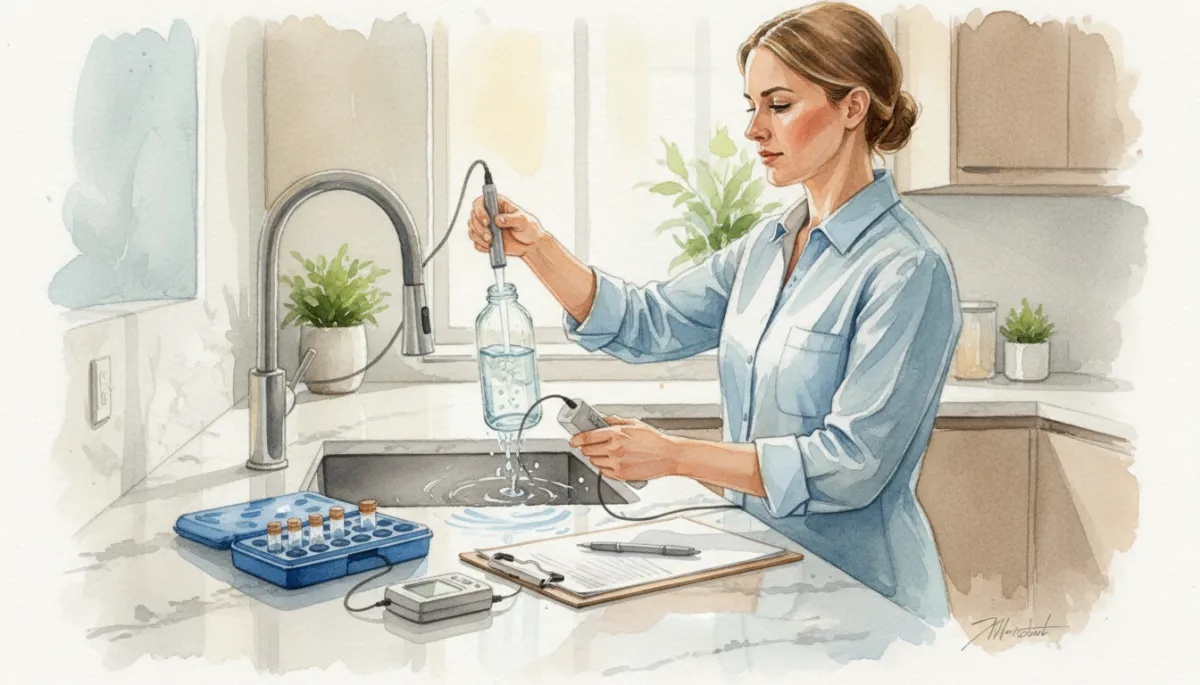
Independent lab testing confirms whether your future well water is safe to drink.
Inspect the Well System: Condition, Code Compliance, and Location
A professional well inspection goes beyond water tests. The inspector will examine the visible components well cap, casing, pressure tank, control box, and wiring and may use specialized tools to assess the pump and overall performance. They will look for signs of corrosion, leaks, improper electrical connections, and other safety issues that could lead to costly repairs or contamination risks later on.
Location also matters. The well should be properly separated from septic systems, fuel tanks, livestock areas, and any potential sources of pollution, following local setback requirements. A well that is too close to a leach field or drainage ditch, for example, may be more prone to contamination, even if the water currently tests clean. Ask the inspector to comment on whether the installation appears to meet current standards or only older codes.
Factor in Ongoing Maintenance, Costs, and Future Risks
Owning a well means planning for regular upkeep. Most experts recommend testing water quality at least once a year, inspecting the well cap and visible components, and servicing the pump and pressure system as needed. Pumps typically last around 10–15 years, but their lifespan depends on usage, water conditions, and installation quality. Replacing a pump or drilling a new well can be a significant expense, so it is wise to set aside funds in your home maintenance budget.
Before closing, ask for a written history of the system: installation dates, repair records, water test results, and any warranties that may transfer to you. Combine that information with your inspection and lab reports to get a clear picture of current condition and likely future costs. If the well needs upgrades or treatment systems, you may be able to negotiate a price reduction or seller credits to offset those investments.
Final Thoughts: Make an Informed Decision, Not a Risky Guess
A property with a well can provide fresh, reliable water and independence from monthly utility bills but only if the system is safe, sufficient, and well maintained. By thoroughly evaluating water quantity and quality, inspecting the equipment, understanding local regulations, and planning for ongoing maintenance, you can move forward with confidence and enjoy the benefits of well ownership instead of worrying about hidden surprises.
📌 Ready to Talk Strategy in Warren County? Connect with a local expert who understands wells, rural properties, and today’s market.
John Meier is a real estate agent in Warrenton, MO (63383) helping sellers in Warrenton, Truesdale, and Wright City.
Westplex Real Estate
📞 (636) 242-5365
🌐 JohnMeierSells.com


