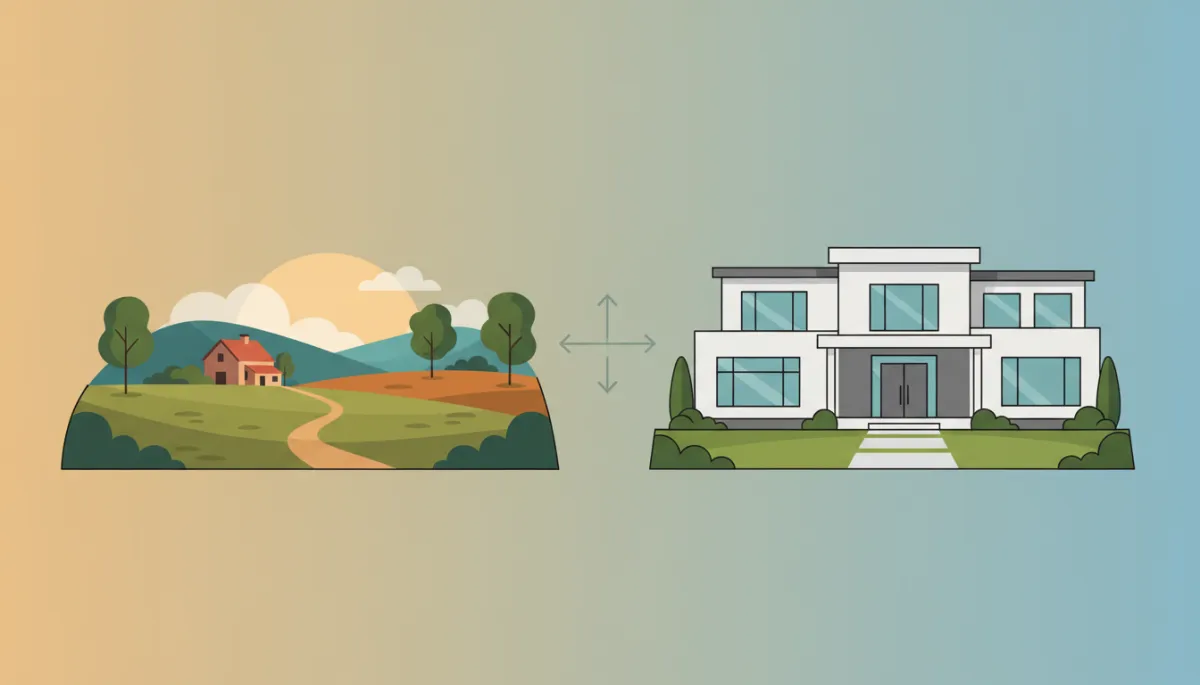
Five Acres vs. Larger House: Which is Better?
Real Estate, Home Buying, Land Ownership
Is Buying Five Acres Better Than Buying a Larger House?
When your budget stretches but your priorities are torn, the choice between buying more land or upgrading to a bigger house becomes a surprisingly emotional decision. Understanding what you truly gain and give up with each option can help you invest with confidence instead of second‑guessing yourself later.
What “Better” Really Means: Lifestyle vs. Square Footage
Asking whether buying five acres is better than buying a larger house is a bit like asking whether an SUV is better than a sports car. Neither is universally superior; each serves a different kind of life. The “better” choice depends on how you live today and how you realistically see yourself living five to ten years from now.
A larger house usually offers immediate comfort and convenience: more bedrooms, bigger common areas, and features like a home office or media room. Five acres, on the other hand, offers space, privacy, and potential but often with more work and less polish at the start. The key is deciding which kind of “more” you actually want: more space inside, or more freedom outside.
The Case for Five Acres: Freedom, Privacy, and Long-Term Potential
Five acres can feel like a world of your own. If you value privacy, quiet, and outdoor living, land can be a powerful upgrade, even if the house itself is smaller or more modest than what you could buy in a subdivision. You gain room for gardens, a workshop, animals, or simply the peace of not seeing neighbors from your kitchen window.
Lifestyle flexibility: Space for hobbies like gardening, small-scale farming, or keeping chickens and horses activities impossible on a typical city lot.
Future building options: Depending on zoning, you may be able to add a guest house, workshop, barn, or even split off a parcel in the future.
Emotional value: For many people, owning land feels like a deeper, more permanent form of security than simply upgrading square footage.
However, land is not a free upgrade. Five acres can mean more maintenance mowing, fencing, snow removal on a long driveway, and caring for outbuildings. You may also be farther from schools, shops, and healthcare, adding time and fuel costs to your weekly routine.
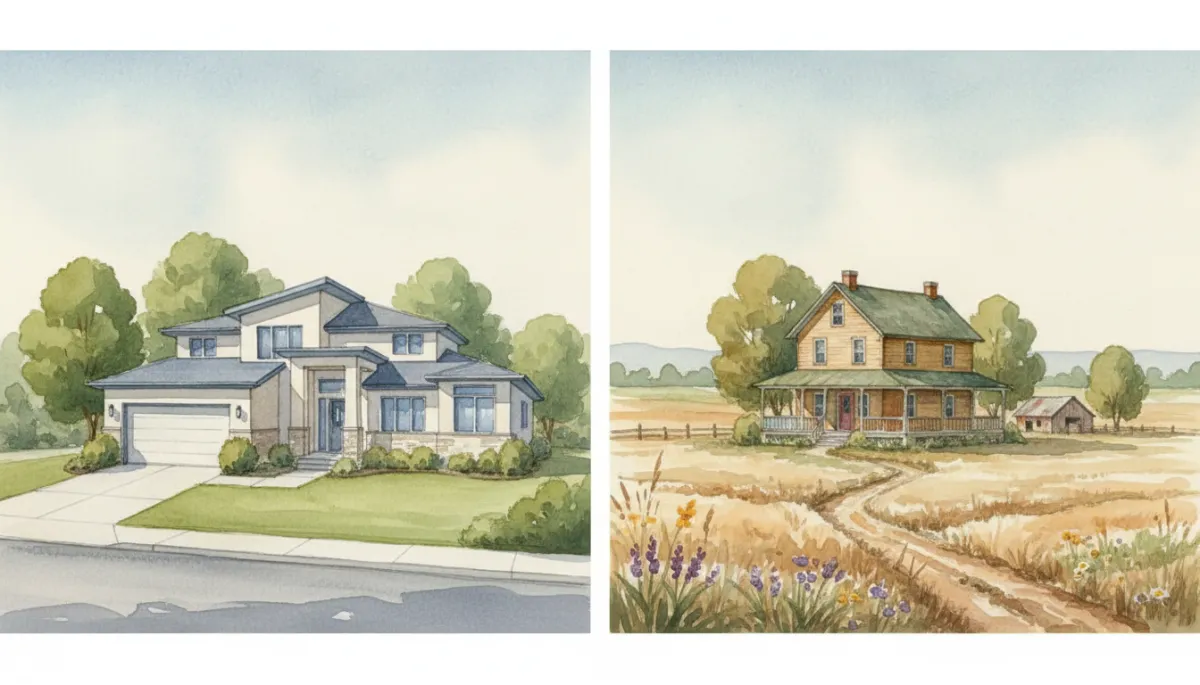
Choosing between land and square footage is ultimately a choice about how you want to live each day.
The Case for a Larger House: Comfort, Convenience, and Resale Appeal
A larger home typically delivers benefits you feel the moment you move in. There’s room for everyone to spread out, host guests, and store belongings without feeling cramped. If you have a growing family, work from home, or entertain often, those extra square feet can transform daily life in a very tangible way.
Immediate usability: Additional bedrooms, bathrooms, and living areas are ready on day one no need to build or develop anything to enjoy them.
Location advantages: Larger homes in established neighborhoods often come with shorter commutes, better school access, and nearby amenities.
Broad resale market: More buyers shop for comfortable, move‑in‑ready homes than for rural properties with significant land, which can make selling easier in many markets.
The trade‑off is that you may feel close to your neighbors and limited in what you can do outside. HOA rules, small yards, and noise can all chip away at the sense of retreat many people crave at home. If you dream of wide open space or a self‑sufficient lifestyle, a big house on a tiny lot may leave you feeling boxed in, no matter how beautiful the interior is.
Financial Considerations: Value, Costs, and Risk
Financially, neither choice is automatically smarter. A five‑acre property might appreciate significantly if development pushes outward, but it can also be slower to sell and more sensitive to changes in zoning or local demand. A large home in a desirable neighborhood may hold value better, but it can also come with higher property taxes, utilities, and HOA fees.
💡 Pro Tip: When comparing options, look beyond purchase price. Estimate monthly costs mortgage, taxes, utilities, commuting, and maintenance for each scenario to see which truly fits your budget and stress level.
Also consider liquidity. If you might need to move quickly for work or family reasons, a larger home in a strong school district may sell faster than a rural five‑acre property aimed at a more specific type of buyer.
So, Is Buying Five Acres Better Than Buying a Larger House?
Buying five acres is “better” if your highest priorities are privacy, outdoor freedom, and long‑term flexibility, and you’re willing to trade some interior space and convenience to get them. It shines for people who want room to create whether that’s a hobby farm, a workshop, or simply a quiet retreat away from crowded streets.
Buying a larger house is “better” if you value daily comfort, shorter commutes, and turnkey living over acreage. It’s often the stronger choice for busy families who need space inside more than they need land outside, and who prefer low‑maintenance living close to schools, shops, and services.
In the end, the right answer isn’t which option is objectively superior, but which one supports the life you actually want to live. Start with your daily routine, your future plans, and your tolerance for maintenance and distance. When those are clear, the choice between five acres and a larger house often becomes clear, too.
📌 Ready to Talk Strategy in Warren County?
John Meier is a real estate agent in Warrenton, MO (63383) helping sellers in Warrenton, Truesdale, and Wright City.
Westplex Real Estate
📞 (636) 242-5365


