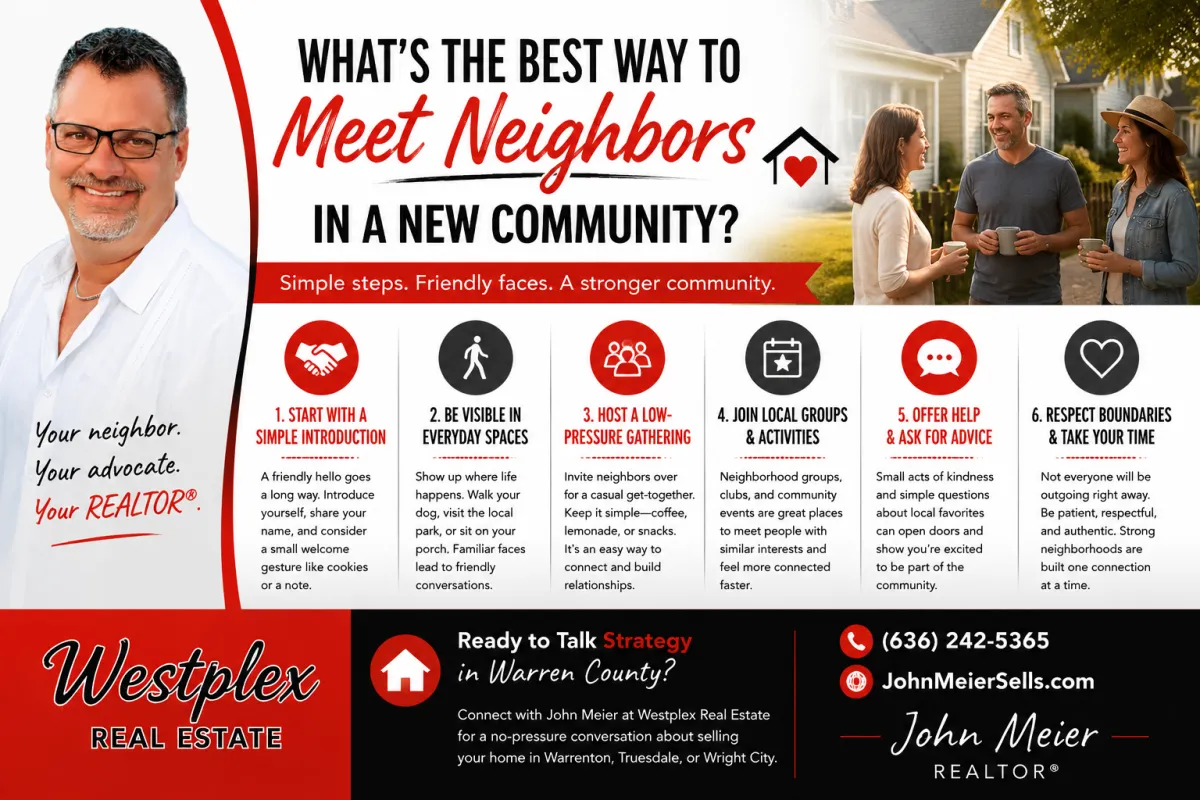
Best Ways to Meet Neighbors in a New Community
Community, Relationships
What’s the Best Way to Meet Neighbors in a New Community?
Moving into a new neighborhood can feel both exciting and intimidating. The good news is that a few simple, thoughtful steps can make meeting your neighbors feel natural, not awkward, and help you feel at home faster.
Start with a Simple Introduction
The most direct way to meet neighbors is often the most effective: knock, smile, and introduce yourself. You don’t need a big speech. A short, friendly script works well: “Hi, I’m Alex, I just moved into the house on the corner and wanted to say hello.”
Consider bringing a small gesture, like a plate of cookies or a handwritten note with your name and contact information. It signals openness without putting pressure on anyone to invite you in or spend a lot of time chatting on the spot.
💡 Pro Tip: Choose a relaxed time, like late afternoon or early evening, when people are more likely to be home and not rushing out the door.
Be Visible in Everyday Spaces
One of the best ways to meet neighbors in a new community is to show up where life naturally happens. Instead of driving everywhere, walk to nearby parks, coffee shops, or the local grocery store when you can. Bring a book to a bench, sit on your front porch, or do a bit of gardening out front. Visibility makes it easier for casual “hello” to turn into “nice to meet you.”
Take regular walks at similar times so you see familiar faces.
Visit neighborhood parks or dog parks if you have a pet.
Sit outside with a coffee rather than staying behind closed blinds.
Host a Low-Pressure Gathering
If it feels comfortable, hosting a small get-together is a warm, memorable way to introduce yourself to several neighbors at once. This doesn’t have to be elaborate. A casual afternoon of lemonade and snacks in your yard, a weekend coffee hour, or a simple “meet-and-greet” on the front lawn can be enough to break the ice.

Informal gatherings make introductions feel natural and help neighbors connect quickly.
Keep the invitation friendly and flexible, such as, “We’re new to the neighborhood and would love to meet you. Drop by anytime between 3 and 5 on Saturday for a drink or a snack.” This communicates that there’s no strict schedule or social pressure, just an open door.
Join Local Groups and Activities
Many communities have built-in ways to connect if you know where to look. Check for:
Neighborhood associations or block clubs.
Local fitness classes, walking groups, or running clubs.
Community centers, libraries, or faith communities with regular events.
Online platforms like neighborhood apps and social media groups can also help you discover what’s happening nearby. When you attend, introduce yourself as new to the area—most people are happy to welcome a newcomer and share tips about favorite spots or local traditions.
Offer Help and Ask for Advice
Relationships deepen when you move beyond small talk. A simple way to do this is by offering help or asking for local advice. You might say:
“We’re trying to find a good local coffee shop do you have a favorite?”
“If you ever need someone to sign for a package, feel free to knock on our door.”
These small exchanges build trust and show that you’re interested in being part of the community, not just living in it.
Respect Boundaries and Move at a Natural Pace
Not everyone will be equally outgoing, and that’s okay. The best way to meet neighbors in a new community is to combine friendliness with respect for boundaries. If someone seems busy or reserved, keep the interaction brief and positive. Over time, repeated, low-pressure encounters often lead to more relaxed conversations.
📌 Key Takeaway: Consistency matters more than grand gestures. A series of small, genuine interactions is what turns strangers into neighbors and neighbors into friends.
Bringing It All Together
So, what’s the best way to meet neighbors in a new community? It’s a blend of showing up, saying hello, and staying open. Introduce yourself, be visible in shared spaces, host a simple gathering, join local activities, and look for small ways to give and receive help. With a little courage and consistency, your new neighborhood can start to feel like home much sooner than you think.


