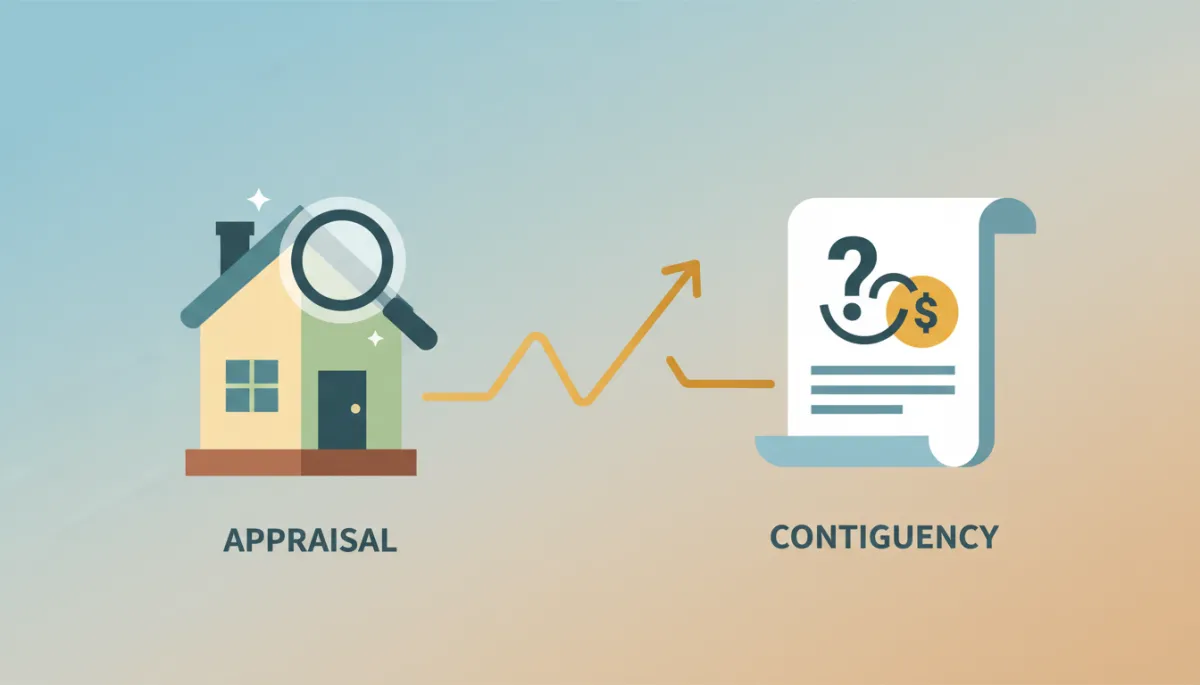
Understanding Appraisal Contingency in Home Buying
Real Estate, Home Buying, Appraisal Contingency
What Is an Appraisal Contingency?
An appraisal contingency is a small clause in your purchase contract that can make a big difference to your wallet. Understanding how it works helps you protect yourself from overpaying for a home and avoid last‑minute financing surprises.
The Basic Definition of an Appraisal Contingency
An appraisal contingency is a condition written into a real estate purchase agreement that makes the sale dependent on the home appraising at or above a certain value, usually the agreed purchase price. If the professional appraiser’s opinion of value comes in lower than that number, the buyer can typically renegotiate or walk away without losing their earnest money deposit, as long as they follow the contract’s rules and deadlines.
In simple terms, this clause says: “I’ll buy this home, but only if a licensed appraiser agrees it’s worth what I’m paying or more.” It creates a safety net for both the buyer and the buyer’s lender by ensuring the price aligns with current market value, not just emotion or bidding-war pressure.
How an Appraisal Contingency Works in a Real Estate Contract
When you make an offer on a home, your real estate agent will usually include several contingencies in the purchase contract. The appraisal contingency is one of the most common, especially when you are using a mortgage to buy the property. After the seller accepts your offer, your lender orders an appraisal as part of the loan approval process. A licensed appraiser visits the home, reviews recent comparable sales, and prepares a detailed report with an estimated market value.
The contingency clause then kicks in. It will usually spell out:
The minimum appraised value required (often the purchase price)
The deadline for completing the appraisal and raising any objections
What options the buyer has if the value comes in low
If the appraisal meets or exceeds the required value, the contingency is satisfied and the sale moves forward. If it comes in lower, the buyer can usually attempt to renegotiate the price, request that the seller make up some of the difference, or cancel the contract under the terms of the contingency without penalty.
💡 Pro Tip: Always pay close attention to the appraisal contingency deadline. Missing it can mean losing the right to back out if the value is lower than expected.
Why an Appraisal Contingency Matters to Buyers and Lenders
For buyers, an appraisal contingency is primarily about protection. It helps prevent you from overpaying in a hot market or for a home that has been overpriced. Without it, you might be forced to bring extra cash to closing if the lender will only finance up to the appraised value. With this clause in place, you have room to reconsider if the numbers do not add up.
Lenders also rely heavily on the appraisal. They base the maximum loan amount on the lower of the purchase price or the appraised value, because the home is the collateral for the mortgage. The appraisal contingency aligns your contract with this reality and gives everyone a clear, fair framework if the value is lower than expected.

A formal appraisal anchors your offer to real market data, not emotions.
What Happens When the Appraisal Is Lower Than the Offer?
A low appraisal does not automatically kill the deal, but it does trigger a decision point. With an appraisal contingency in place, you typically have several options:
Renegotiate the price: Ask the seller to reduce the price closer to the appraised value so financing still works.
Split the difference: You and the seller agree to meet in the middle, with you possibly adding some extra cash to cover the gap.
Cancel the contract: If you cannot reach an agreement, you may be able to walk away and recover your earnest money, according to the contingency terms.
Some buyers choose to waive or limit appraisal contingencies in competitive markets to make their offers more attractive. While that strategy can help you stand out, it also increases your financial risk. Before agreeing to any change, talk with your real estate agent and lender so you fully understand the trade‑offs.
The Bottom Line on Appraisal Contingencies
An appraisal contingency may look like one short paragraph in a long contract, but it carries real power. It ties your purchase price to a professional, third‑party opinion of value and gives you structured options if that value does not match your offer. Whether you are buying your first home or your fifth, understanding how this contingency works can help you make calmer, more confident decisions in a fast‑moving housing market.


